The Body in Conversation. Part 11: When the Workaround Becomes the Pattern
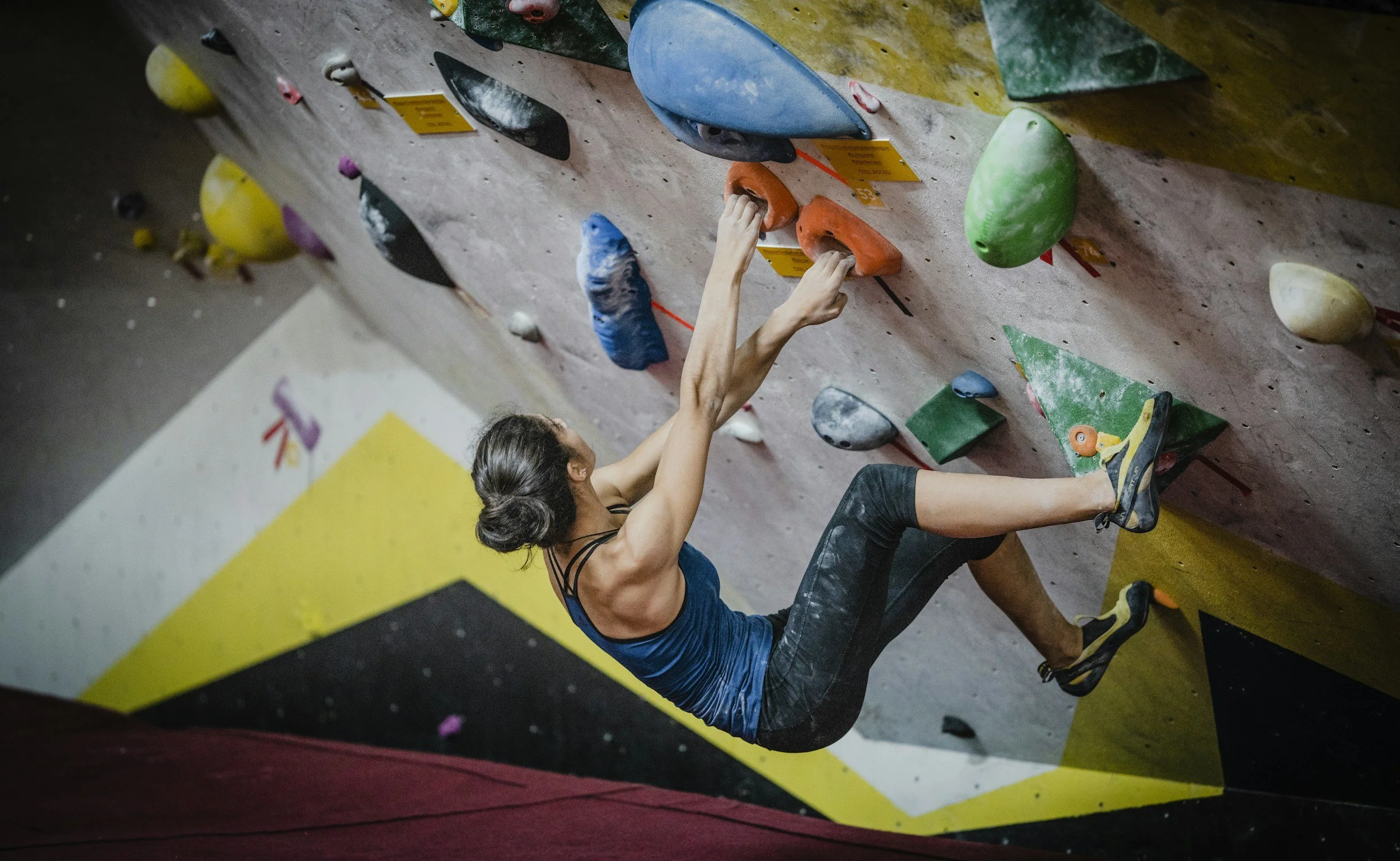
The body is incredibly good at finding another way. The question is whether it still has choices.
One of the things I have become more and more interested in over the years is just how inventive the body is. We often talk about compensation as though it is evidence that something has gone wrong, but actually compensation is one of the reasons we are able to keep functioning at all. If something hurts, stiffens, weakens or becomes temporarily unavailable, the body does not sit down or refuse to continue with life until everything is perfect again. It finds another way.
Sometimes that other way is exactly what we need. After an injury, during pregnancy, following surgery, through a long period of coughing or pain, or even during a particularly stressful period of life, the body adapts so that we can carry on. It changes how much something moves, where force is produced, which muscles contribute and even how we breathe. That is most definitely not failure. It is an incredibly useful survival skill.
I have clients who have adapted to leg-length differences, scoliosis and even the loss of toes. Some of these adaptations are temporary fixes and some are strategies that will be needed for a lifetime. The interesting question for me is what happens when a lifetime adaptation, which has been incredibly useful, starts contributing to wider issues elsewhere in the body.
Breathing is a beautiful example of this because, whatever else is going on, the body still needs to move air. If part of the ribcage is not moving particularly well, perhaps because someone has broken a rib, breathing does not stop. The movement may simply be found somewhere else. If the abdominal wall is held firmly for long periods, the body still finds a way to change shape. If someone has become accustomed to bracing before movement or using the neck and upper chest more heavily during breathing, that strategy can gradually become so familiar that it no longer feels like a strategy at all. It simply feels normal.
Most people do not notice that process happening. They are much more likely to notice the consequences. Their neck and shoulders may feel constantly busy, their jaw may always feel tight or sore, their ribs may feel stiff, or they may feel as though they cannot quite get a satisfying breath. They might find themselves taking a huge breath every so often, sighing frequently or holding their breath whenever they lift, concentrate or prepare for something difficult. None of those things tells us the whole story by itself, but together they can start to give us clues about how the body has organised itself.
This is why I spend so much time observing rather than immediately correcting. When somebody breathes, I am not only interested in whether the ribs expand or whether the abdomen moves. I am watching the whole person. I want to see what changes when they stand up, when they reach, when they walk, when they carry something and when a little more demand enters the system. A breathing pattern that looks beautifully organised on the floor may look completely different once that person is standing and life starts making movement and pressure demands of them.
For me, that is much more interesting than trying to decide whether a breath is right or wrong. Bringing awareness to it is often the first step. Habitual patterns take a long time to build, and they can take real awareness to change.
A pattern may have made perfect sense when it first appeared. Someone may have been protecting pain, recovering from abdominal surgery, managing prolapse symptoms, frightened of leaking, coughing for months or simply doing what they had repeatedly been told to do and holding the stomach in tightly. The body found a way of coping with what was happening at the time, and because that strategy worked, it kept using it.
Bodies are very good at repeating things that have helped before.
And this is where the brain comes properly into the story.
I explored this in an earlier blog about predictive coding and the idea that the body does not simply “store” a pattern like something locked away in the tissues. The brain and nervous system are constantly using previous experience to predict what is likely to happen next. That is incredibly useful most of the time because it means we do not have to consciously work everything out from scratch every second of the day.
But those predictions can become outdated.
If movement once hurt, the brain may begin preparing for pain before the movement has even happened. If jumping once caused leaking, the body may start bracing before the feet ever leave the floor. If breathing deeply once felt uncomfortable or unsafe, a smaller breath may begin to feel like the safer option. If holding the abdomen firmly helped someone feel supported after surgery, pregnancy or pelvic floor symptoms, the system may keep returning to that strategy because it already knows it.
The body is not making a stupid mistake.
It is working from the information it has learned.
That is why a pattern can remain even when the original reason for it has changed or disappeared. The strategy is familiar, and familiar can feel safe.
This idea of prediction is important because it means that changing a pattern is not simply about stretching a tight bit, strengthening a weak bit or telling someone to “breathe properly”. We have to give the whole brain-body system new information and enough repeated experiences for it to learn that another option is available.
The difficulty is that the body does not necessarily get a clear message that the situation has changed. A strategy may have been useful while the nervous system was on alert, but once the threat has passed the body can simply settle into the pattern that now feels familiar. Think about the changes after giving birth, when the ribs, pelvis and organs have all had to adapt over many months, or about living in a fearful or stressful situation where shallow breathing may have become part of the way the nervous system coped.
A strategy that began as a useful temporary response can become familiar, and familiar can eventually feel normal. Once that happens, other parts of the body may gradually organise themselves around it too.
The diaphragm is still breathing throughout all of this, but it may now be working inside a ribcage that has become less mobile, an abdominal wall that rarely yields fully, a trunk that braces quickly or a nervous system that has become very used to being prepared. The pelvic floor is responding within that same changing pressure environment, while the neck, jaw and shoulders may have become increasingly involved in helping the whole system along.
This does not mean that one of those areas is suddenly the evil villain.
It means the whole person has adapted.
And adaptation always changes the problem the body is solving. It never applies to just one part or the body, it affects the whole.
That is why I think movement and posture are such important parts of breath work. If all we ever do is teach someone to breathe beautifully in one position, without looking at the broader coping strategies, we can very easily create another version of the same problem. We can give them a new pattern to perform rather than helping the body regain the ability to adapt.
I am not especially interested in replacing one breathing, movement or posture rule with another.
I am much more interested in whether someone has enough movement available through the ribs, spine, pelvis and abdominal wall for the breath to reorganise when the task changes. I want to know whether they can create force without automatically shutting the breath down, whether they can move into a different position without everything immediately becoming rigid, and whether the breath can continue to participate when they are carrying, walking, climbing, balancing or simply getting on with life.
That is where breathing becomes useful rather than performative.
Ultimately, we should not need to spend every waking moment monitoring the movement of our ribs and instructing the diaphragm what to do. The nervous system should have enough information and enough movement available to find an appropriate response without us consciously supervising every breath.
A quiet breath while reading a book should not look exactly like the breath used to carry a heavy box upstairs. The strategy we use when we are relaxed on the floor should not necessarily be the same one we use when we have to react quickly, catch ourselves from a stumble or produce a lot of force. Healthy function is not one perfect pattern repeated regardless of the circumstances. It is the ability to change.
That, for me, is where the idea of compensation becomes much more useful.
The problem is not that the body found another way. That was the clever bit.
The problem can arise when that other way becomes so dominant that there is nowhere else to go. And for permanent issues, such as a shorter leg, the adaptations that are needed to keep the body functioning can themselves start to create problems if movement gradually loses its adaptability.
Then our job is not to tell the body that it has been doing everything wrong. It is to start gently expanding the choices available again. We can introduce movement where movement has disappeared, allow tissues that have become very guarded to change shape, build strength where more capacity is needed and gradually give the nervous system different experiences to work with.
We are not trying to erase the old strategy. For some people, that strategy is still incredibly important.
I had a client who constantly tightened her upper trapezius because part of her shoulder complex was structurally compromised and was never going to return to normal. When we initially encouraged those muscles to release, we discovered that the strategy had actually been helping to stabilise her ribs and spine. So we did not simply try to remove it. We allowed some of that upper trapezius activity back in while also beginning to develop other areas that could share the work.
That is the difference.
We are giving the body alternatives.
And I think that is an important distinction, because the body is rarely trying to sabotage us. Most of the patterns we become frustrated with began because the body was doing its best to solve a problem with the information and resources it had at the time.
Sometimes that solution was incredibly clever.
It just stayed around for longer than we needed it.
That is where the conversation starts to change.
Have a play with your own workarounds
This is one of those things that is much easier to understand when you actually feel it in yourself.
Start somewhere comfortable, sitting or standing, and just notice your breathing. Don’t improve it. Don’t make it bigger. Don’t try to do anything clever with your ribs. Simply notice where the movement seems to be happening and how much effort it takes.
Now change the problem slightly. If you are sitting, shift most of your weight onto one sitting bone. If you are standing, move most of your weight onto one foot. Stay there for a few breaths and notice what your body does with it. Perhaps one side of the ribcage suddenly moves differently. Perhaps the breath becomes smaller somewhere, your neck gets involved or you find yourself bracing without intending to.
Then come back to the middle.
Nothing needed fixing. You simply changed the task and the body reorganised.
Now make it a bit sillier.
Clench one hand really tightly, as though somebody is trying to steal the last biscuit from you and you are absolutely not letting go. Keep breathing and notice what happens. Your jaw may join in, the abdominal wall may firm, you may feel more tension around the lower ribs or diaphragm area, or your shoulders may start helping with a job they were never actually invited to.
Then let the hand go and notice whether the breath changes again.
This is the bit I find fascinating. We often think of a compensatory pattern as something big and dramatic, but sometimes you can create one in seconds simply by changing the demand.
Try reaching one arm as high overhead as you comfortably can. Don’t force it. Just reach and notice whether the breath still moves easily. Then lean very slightly to the opposite side and breathe again. You may suddenly discover an area of ribcage that feels completely different simply because you changed the position of the trunk.
Come back to centre and compare.
Then, if it feels comfortable for you, stand on one leg and just breathe. You may suddenly become incredibly serious. Your toes might grab the floor, your jaw may tighten, your arms may float out to the sides, or you may even stop breathing for a moment while your nervous system concentrates on keeping you upright.
Put the foot down.
Suddenly breathing may feel easy again.
That is compensation happening right in front of you.
The body did not make a mistake.
You changed the problem, so it changed the solution.
You can even try walking around the room while deliberately holding your breath for a second or two, then let the breath go and walk normally again. Notice how quickly the rest of the body changes with something as simple as breath-holding. Your stride may alter, your trunk may become firmer and your shoulders may behave differently.
Then let it all go.
The point of all of this is not to find your “bad” compensations.
Please don’t finish this section with a new collection of things to worry about.
The point is to notice just how beautifully and quickly your body adapts.
Every time you change the task, your nervous system has another problem to solve.
The question I am interested in is not whether it compensates.
Of course it does.
The question is whether, when the task changes again, it can find another way.
In Part 12, I want to bring this entire series back to Hypopressives and look at what we are actually asking the diaphragm, ribcage, abdominal wall and pressure system to do during the apnoea.
Because Hypopressives are not about sucking the stomach in or creating some magical vacuum.
They are another way of changing the conversation.
If you enjoy disappearing down the rabbit hole as much as I do, here are a few of the papers that informed this part of the series.
Hodges PW, Heijnen I, Gandevia SC. Postural activity of the diaphragm is reduced in humans when respiratory demand increases. Journal of Physiology, 2001. Really useful for the idea that the diaphragm has to juggle respiratory and postural demands, and that one demand can affect the other.Kolar P et al. Postural function of the diaphragm in persons with and without chronic low back pain. Journal of Orthopaedic & Sports Physical Therapy, 2012. Helpful for exploring how diaphragm behaviour can differ during postural tasks.
Boulding R et al. Dysfunctional breathing: a review of the literature and proposal for classification. European Respiratory Review, 2016. This is a good broader read because it discusses thoracic-dominant breathing, periodic sighing, forced abdominal expiration and thoraco-abdominal asynchrony, while also showing how messy and varied “dysfunctional breathing” actually is.
Janssens L et al. The effect of acute respiratory demand on postural control: a systematic review. Gait & Posture, 2024. A useful newer overview of the interaction between breathing demands and balance/postural control.
Stacey A, Sanchez-Bracero D. Outcome measures for dysfunctional breathing: a scoping review of use, validation, and research gap. Respiratory Medicine, 2026. This is especially interesting because it shows that the field still lacks one clean, universally accepted way to define and measure dysfunctional breathing. That fits your reluctance to label one pattern as simply “wrong”.