Designed for Women - or Done to Women?
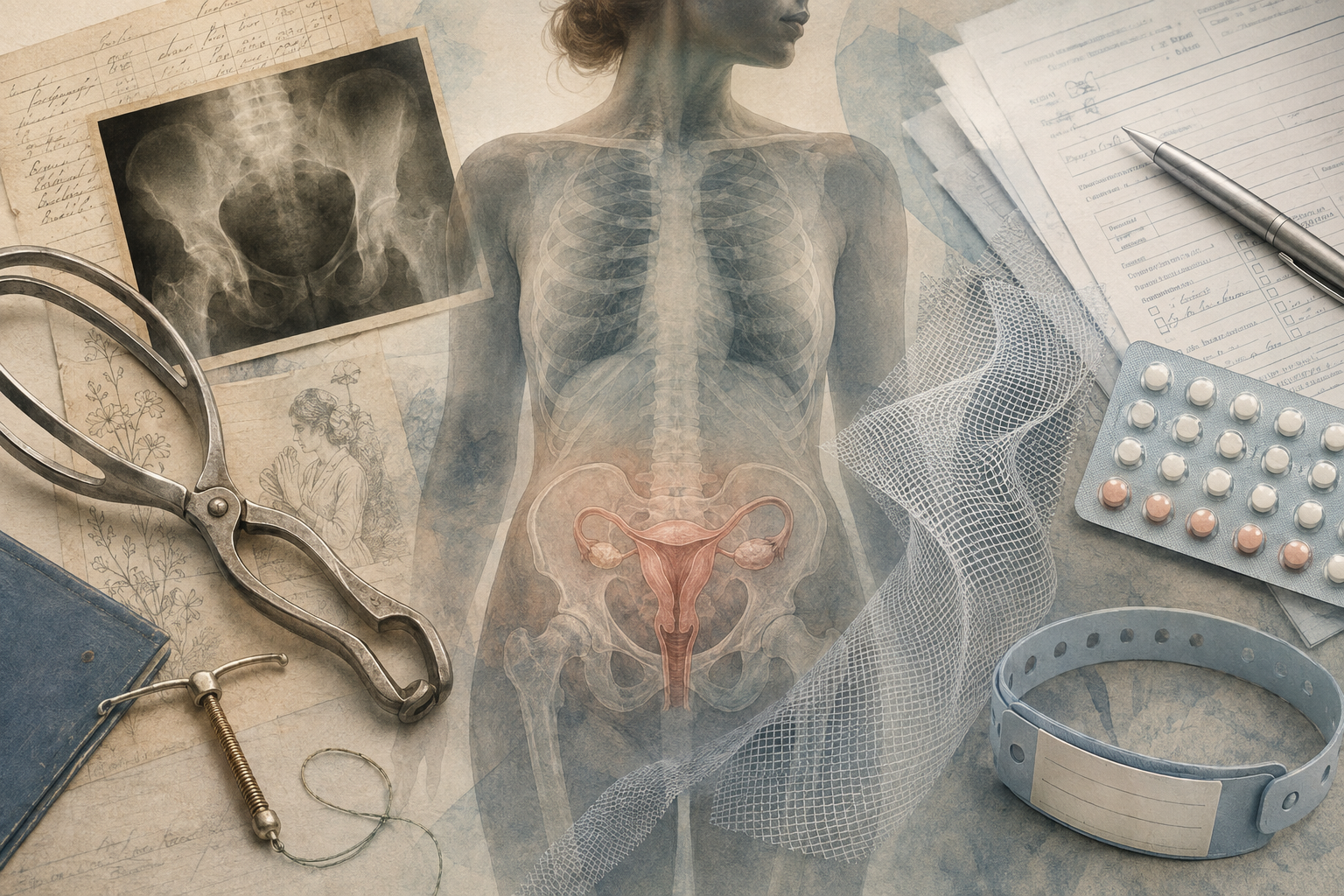
Throughout history, countless products, procedures and medical inventions have been created to prevent pregnancy, control fertility or assist childbirth.
Many have saved lives.
Others have caused infection, infertility, pelvic-floor damage, chronic pain, sexual difficulties, psychological trauma and even death.
Some were eventually withdrawn or prohibited. Some became obsolete as evidence of harm accumulated. Others remain in use today, despite continuing concerns about injury, inadequate warnings and failures of informed consent.
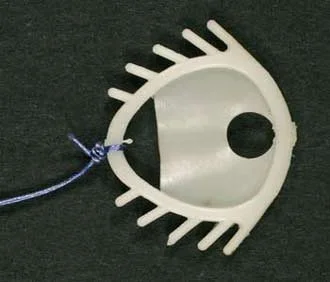
The Dalkon Shield pictured
The uncomfortable question is this:
How many of these inventions were genuinely designed around women’s wellbeing, and how many were designed to control reproduction, speed up birth or make treatment more convenient for somebody else?
The Dalkon Shield
The Dalkon Shield was an intrauterine contraceptive device sold during the early 1970s.
Unlike modern T-shaped intrauterine devices, it had a broad, shield-like design and a multifilament removal string. That string could allow bacteria to travel upwards into the uterus.
The device became associated with serious pelvic infection, septic miscarriage, infertility and deaths.
It was eventually withdrawn, but not before thousands of women had suffered life-changing harm.
The Dalkon Shield is often presented as an isolated historical disaster — a badly designed device from a less regulated medical era.
But that framing is too comfortable.
It allows modern medicine to place the Dalkon Shield safely in the past rather than asking whether similar patterns still happen today.
From the Dalkon Shield to Mirena: Have We Really Learned Enough?
Modern intrauterine devices are differently designed, but that does not mean comparisons with the Dalkon Shield are at all unreasonable.
The Mirena intrauterine system has also been associated with some serious complications, including uterine perforation, displacement, expulsion, infection and sepsis.
A device that perforates the uterus may move outside the uterine cavity. It can enter the pelvic or abdominal cavity, become embedded in surrounding tissues and require imaging or surgery for removal.
These events may be described as rare.
But “rare” is a statistical description.
It tells us nothing about how catastrophic the experience may be for the individual woman, whether she was properly warned, whether her symptoms were believed or how long she had to fight for investigation and treatment.
Thousands of women brought legal claims alleging injury from Mirena, including perforation and migration, and alleging that warnings were inadequate. Some claims were settled, while others were dismissed.
A settlement is not automatic proof that every allegation was established. But extensive litigation should not be casually brushed aside either.
Nor should women’s experiences be dismissed simply because a complication with a device or anything else falls within a low statistical percentage.
The parallel with the Dalkon Shield is not that the two devices are identical, because they are not.
The parallel that I am drawing here is the repeated pattern and that pattern is:
A reproductive product is promoted as convenient and effective, and is marketed as such. Then women begin to report serious adverse effects, initially their symptoms are minimised, dismissed or treated as unrelated. The risks start to become clearer through post-market experience. Women then have to fight and for some this is for years before they are believed, treated and compensated. Many encountering serious life altering experiences and effects, some of these proving fatal.
Modern medicine may have improved its materials, designs and data collection.
It has not necessarily eliminated the culture in which women’s pain and reproductive injuries are discounted, and women’s anxieties around worsening symptoms dismissed as hysterical.
The proper question is not simply:
“Is the modern device safer than the Dalkon Shield?”
It is:
“Were women told enough to make an informed decision, were adverse events investigated honestly, and were those who were harmed believed and properly supported?”
Tested on Women Who Had the Least Power to Refuse
The development of modern contraception is often told as a straightforward story of scientific progress and female liberation.
There is real truth in that story.
Reliable contraception has allowed millions of women to decide whether and when to become pregnant, continue their education, build careers, protect their health and leave relationships in which they did not feel safe.
But this progress came with another, much less comfortable history.
Many of the women who carried the risks of early contraceptive research were poor, racialised, disabled, institutionalised or living under colonial rule. They were often the women with the least power to question a doctor, refuse participation, demand a different treatment or obtain help when something went wrong.
The problem was not simply that contraceptive products had side effects.
All medicines carry risks, and medical knowledge has to develop through research.
The deeper problem was that some women were never treated as equal partners in any of that research.
They were treated as convenient bodies on which a product could be tested. That makes my blood boil and also makes me sad.
The Puerto Rico Pill Trials
One of the clearest examples of this is the large-scale testing of the first contraceptive pill in Puerto Rico during the 1950s.
Researchers Gregory Pincus and John Rock had already conducted smaller trials in the United States, but they needed a larger group of women before seeking approval for the drug.
Puerto Rico was seen as an ideal location.
It was a United States territory where contraception was legal, poverty was very widespread and government officials were already promoting birth control as an answer to what they described as overpopulation.
The island also had an established network of birth-control clinics and a population that researchers believed could be monitored relatively easily.
The women recruited were largely poor Puerto Rican women living in housing projects.
The researchers’ own reasoning was deeply revealing. They believed that if poor and supposedly “uneducated” Puerto Rican women could successfully follow the pill regimen, then women anywhere could use it.
The women were therefore not only being asked whether the contraceptive worked. Their ability to follow instructions was itself part of what was being tested.
The trial began in 1956 using a high-dose version of Enovid. The dose was considerably higher than that found in most modern combined contraceptive pills.
The drug was extremely effective at preventing pregnancy when taken correctly.
But the side effects were pretty substantial.
After the first year, Dr Edris Rice-Wray, the physician who was overseeing the trials in Puerto Rico, reported that 17% of participants complained of problems including nausea, dizziness, headaches, stomach pain and vomiting. She concluded that the dose produced too many adverse effects to be generally acceptable.
Her concerns were totally dismissed.
Pincus and Rock considered many of the symptoms minor or psychosomatic and took no action to investigate their cause. Three women died during the trials, yet no investigation was undertaken to determine whether the drug had contributed to their deaths.
Most disturbing of all, the participants had reportedly been told that the tablets would prevent pregnancy, but not that they were taking part in an experimental clinical trial.
They were not clearly told that the drug had not yet been approved, that the dose was experimental or that serious unknown risks might exist.
The women may have wanted contraception. That does not mean they consented to being research subjects.
Wanting to avoid pregnancy is not the same as agreeing to carry the unknown risks of an experimental drug.
When Women’s Symptoms Were Called Psychosomatic
The Puerto Rico trials also reveal a pattern that continues to appear throughout women’s healthcare.
Women reported symptoms.
A female doctor recognised that those symptoms were serious.
The male researchers responsible for the product decided that the women were exaggerating or that their reactions were psychological.
The contraceptive effect was treated as objective evidence.
The women’s pain, nausea, dizziness and distress were treated as subjective noise.
This distinction matters massively because it determined what counted as success.
If the only important outcome to the researchers and drug companies was whether pregnancy had been prevented, the trial looked highly successful.
If the women’s physical wellbeing, informed consent and unexplained deaths were included, the picture became very different.
That three women dying during a clinical trial should have prompted a thorough investigation.
The fact that their deaths were not investigated means we cannot now confidently say whether the pill contributed to them.
That uncertainty is not reassuring.
An absence of evidence is not evidence that no harm occurred. It may simply mean that the right questions were not asked, the deaths were not investigated, or the information needed to identify a connection was never collected.
A lack of proof should not automatically be treated as a green light.
Contraception, Colonialism and Population Control
The trials did not take place in isolation.
Puerto Rican women were living within a broader political programme that linked poverty to women having too many children.
Rather than focusing solely on low wages, colonial exploitation, poor housing or unequal access to resources, government policy increasingly treated fertility itself as the problem.
Birth-control programmes and sterilisation were promoted as solutions to poverty.
By the mid-1960s, approximately one third of Puerto Rican women of childbearing age had been sterilised.
Not every sterilisation was forced. Many women actively sought permanent contraception, particularly where other reliable options were limited.
However, choice does not exist in a vacuum.
A woman may technically agree to sterilisation while living in a system where:
Reversible contraception is difficult to access.
Doctors strongly recommend permanent sterilisation.
Consent forms are not properly explained.
Information is not provided in her first language.
Sterilisation is offered immediately after birth, when she is exhausted or medicated.
Poverty is presented as evidence that she should not have more children.
Wider social policy treats her fertility as undesirable.
The fact that some women wanted sterilisation cannot be used to erase the experiences of those who were pressured, misled or sterilised without meaningful consent.
Sterilisation as Social Policy
The reproductive control of marginalised women was not confined to Puerto Rico.
Throughout the twentieth century, eugenic sterilisation programmes operated across the United States.
People labelled intellectually disabled, mentally ill, socially inadequate, sexually immoral, poor or otherwise “unfit” could be sterilised under state law.
Women and girls were especially vulnerable.
Latina women and girls were disproportionately targeted under California’s eugenic programme. Researchers examining more than 17,000 sterilisation recommendations between 1920 and 1945 found that Latinas experienced a 59% higher sterilisation rate than non-Latina women within the institutions studied.
Black women in the American South were sometimes sterilised during other medical procedures without their knowledge. The practice became so notorious that an unnecessary hysterectomy or tubal sterilisation was sometimes described as a “Mississippi appendectomy.”
Native American women were also sterilised through Indian Health Service facilities and contracted hospitals.
A 1976 investigation by the US Government Accountability Office examined 3,406 sterilisation procedures performed in four Indian Health Service areas between 1973 and 1976. More than 3,000 of the procedures involved women. The investigation found failures in compliance with consent requirements, including inadequate documentation and procedures performed on women below the minimum age specified by federal safeguards.
These women were not simply offered contraception.
Their ability to reproduce was treated as something the state, the medical profession or wider society had a right to manage.
What Happened in Britain?
Britain did not introduce the same kind of nationwide compulsory sterilisation laws adopted by many American states and several European countries.
But Britain was not untouched by eugenics.
During the early twentieth century, influential doctors, politicians and members of the British Eugenics Society argued that people described as “mentally deficient,” disabled, poor or socially undesirable should be prevented from having children.
Campaigners repeatedly attempted to legalise eugenic sterilisation during the 1920s and 1930s. Their proposals were ultimately unsuccessful, and Britain never established a formal mass sterilisation programme comparable with those in the United States or Nazi Germany.
Instead, Britain often pursued reproductive control through segregation and institutionalisation.
The Mental Deficiency Act 1913 allowed people classified as “feeble-minded,” “moral imbeciles” or “mental defectives” to be confined in institutions, sometimes indefinitely.
Women and girls were particularly vulnerable.
A woman could be judged morally defective because she was unmarried, pregnant, poor, sexually active or believed unable to care for a child. Some women were separated from their babies and remained institutionalised for decades.
They may not have been surgically sterilised, but segregation prevented them from forming relationships, living independently or having further children.
The outcome was effectively the same, it was still reproductive control.
Britain therefore followed a different route from the United States.
Rather than passing widespread compulsory sterilisation laws, it often removed marginalised people from society and restricted their opportunity to reproduce.
Sterilisation has also continued to raise difficult questions in individual British medical and legal cases.
Courts have occasionally been asked to authorise sterilisation for women with learning disabilities who were considered unable to make the decision themselves. These cases are legally presented as decisions about the woman’s health and “best interests,” not as eugenic population policy.
The legal framework was different, but the central question of bodily autonomy remained.
But so does the continuing question at their centre:
Who has the authority to make an irreversible decision about another woman’s fertility?
Britain cannot claim that it escaped the reproductive politics of eugenics simply because it did not create a mass sterilisation programme.
It used institutions, social classification and medical authority to decide which women were considered fit to become mothers, and which were not.
Norplant and the Return of the Same Idea
The same thinking reappeared after Norplant was approved in the United States in 1990.
Norplant consisted of hormone-releasing capsules implanted beneath the skin of the upper arm. It provided several years of contraception and could be an effective and welcome option for women who chose it.
But almost immediately, politicians, judges and commentators began proposing that it should be used to control the fertility of women receiving welfare benefits, women convicted of crimes and women accused of using drugs during pregnancy.
Some proposed financial incentives for poor women to accept the implant. Others suggested making Norplant a condition of probation or a way to reduce welfare spending.
The American Civil Liberties Union warned that these proposals particularly targeted low-income women and women of colour. The American Medical Association also condemned the coerced use of Norplant through sentencing or welfare programmes.
The concern was heightened by the nature of the device. That a woman could not simply stop taking it herself. Removal required access to a trained medical professional.
That creates an obvious imbalance of power.
A woman may be encouraged, pressured or ordered to accept an implant, yet later find that removal is expensive, unavailable or refused.
A contraceptive can only represent freedom when the woman has an equally real right to stop using it.
Choice for Some, Control for Others
The history of contraception contains a striking contradiction.
Affluent women have often had to fight for the right to access contraception.
Poor, disabled, Indigenous and racialised women have often had to fight for the right not to have contraception or sterilisation imposed upon them.
One group was told:
“You are not allowed to prevent pregnancy.”
Another was told:
“You should not be allowed to become pregnant.”
Both positions deny women authority over their own bodies.
Reproductive freedom cannot mean simply increasing the number of contraceptive methods available.
It must include the right to:
Choose contraception.
Refuse contraception.
Understand that a product is experimental.
Receive honest information about side effects and uncertainty.
Stop a method that is causing harm.
Have an implant or device removed.
Choose a different method without punishment or pressure.
Decide whether to continue or end a pregnancy.
Decide whether to have children at all.
Consent Is More Than a Signature
A signed form does not automatically prove that a woman made a free and informed decision.
Consent is undermined when information is incomplete, deliberately minimised or delivered in language the woman cannot understand.
It is also undermined when refusal carries a threat.
A woman is not choosing freely if she believes that saying no might affect her welfare payment, immigration status, medical treatment, release from custody or access to care.
Nor is consent fully informed when she is told only that a method is effective, without being told:
That the product is still experimental.
What side effects have already been reported.
What remains unknown.
Whether stopping it will require surgery or specialist treatment.
Whether fertility will return immediately.
What support is available if complications develop.
Whether safer or less invasive alternatives exist.
The World Health Organisation and other United Nations agencies now state clearly that sterilisation must be based on the person’s full, free and informed decision, without discrimination, coercion or violence.
That principle should apply to every form of contraception.
The Harm Was Not Only in the Product
Some women experienced direct physical harm from contraceptive drugs, devices or surgery.
Others may never have suffered a serious medical complication.
But harm can also exist in the way a product is tested or delivered.
The harm includes:
Being used in research without knowing it.
Having symptoms dismissed as psychological.
Being pressured into accepting a long-acting method.
Being denied removal.
Being sterilised without understanding that the procedure is permanent.
Having a medical decision shaped by racism, poverty or disability.
Being treated as a population problem rather than a person.
This is why the history cannot be reduced to a debate about whether contraception is good or bad.
Contraception can absolutely be liberating.
It can also become an instrument of control when the person offering it has more power than the person expected to accept it.
The same drug or device can represent freedom for one woman and coercion for another.
The difference is not only what was placed inside her body.
It is whether she understood, chose and retained control over what happened next.
Preventing Pregnancy Was Not More Important Than the Woman
The women who took part in early contraceptive trials helped create methods later used by millions.
They made an enormous contribution to reproductive medicine.
But many were never properly told that this was the contribution they were making.
Their poverty, race and political circumstances made them easier to recruit and easier to disregard.
The history forces us to ask a difficult question:
Would the same risks, incomplete explanations and lack of follow-up have been considered acceptable if the trial participants had been wealthy white women with powerful families and private doctors?
Scientific progress does not become ethical simply because later generations benefit from it.
The women carrying the risk must also be protected.
Preventing pregnancy can never be treated as more important than the health, dignity and autonomy of the woman whose body makes that prevention possible.
Essure: Permanent Contraception Without an Incision
Essure was marketed as a less invasive form of permanent contraception.
Small metal coils were inserted through the uterus and into the fallopian tubes. Scar tissue then developed around the coils, blocking the tubes.
For some women, the procedure worked really successfully.
However, others reported persistent pelvic or abdominal pain, abnormal bleeding, perforation, device migration, breakage and suspected reactions to the device’s metals.
Many women required further procedures, including major surgery, to remove the devices.
Long-term follow-up studies found that approximately one in five women had their Essure devices surgically removed within ten years. Not every removal was formally attributed to a device complication, but around 60% of removals were for pain, and abnormal bleeding, migration and perforation were among the other leading reasons formally reported.
Removal was not necessarily a simple solution: some women needed major surgery, some experienced complications during removal, and not everyone’s symptoms resolved afterwards
Really tragically, deaths were also reported among women and babies following Essure implantation.
FDA records included 28 reported adult deaths, alongside reports of infant deaths, pregnancy losses and deaths associated with ectopic pregnancy.
There were also 2,346 reported pregnancy losses, including 601 ectopic pregnancies. These reports included 22 pregnancy losses recorded within the FDA’s review of death reports, five infant deaths following live birth and two deaths associated with ectopic pregnancy.
However, the FDA cautions (usually to cover themselves) that adverse-event reports do not always contain enough medical information to determine whether Essure directly caused each death or pregnancy loss. They say that in some cases, the outcome may have been related to pregnancy complications, the removal procedure, another medical condition or a combination of factors.
This does not make the reports insignificant by any stretch of the imagination, women and babies died. What It highlights is the limitations of post-market surveillance and the difficulty of establishing the full scale of harm once a device has already been implanted in hundreds of thousands of women.
I am thankful that Essure is no longer available for implantation into any woman.
But yet again, the lesson is not that every implanted contraceptive device is harmful.
The lesson is that “minimally invasive” does not necessarily mean minimally consequences. And proper information about complications and outcomes should be clearly explained before consent can be given.
Transvaginal Mesh
Transvaginal mesh was promoted as a way to reinforce pelvic tissues affected by pelvic-organ prolapse.
For many women, however, the mesh became a source of persistent pain, chronic infection, exposure through the vaginal tissues, sexual difficulties and repeated surgery.
Some women reported that the mesh cut through tissues, contracted, moved or became impossible to remove fully.
The resulting harm was not only physical.
Women described losing relationships, careers, mobility, sexual function and trust in the healthcare system.
In the United States, surgical mesh specifically intended for the transvaginal repair of pelvic-organ prolapse was removed from the market.
On 16 April 2019, the FDA ordered the remaining manufacturers to stop selling and distributing these devices immediately because they had failed to demonstrate reasonable assurance of their safety and effectiveness. The manufacturers subsequently withdrew the products from the American market.
Even though this action was taken, the FDA continues to state that the benefits of mesh placed transvaginally to treat pelvic-organ prolapse do not outweigh its risks.
Sadly this also did not remove every form of pelvic or surgical mesh from use. It did not include mesh inserted through the abdomen for prolapse surgery, mid-urethral mesh slings used for stress urinary incontinence, or mesh used for hernia repair and other procedures.
But the transvaginal-mesh scandal reflects what has come to be a familiar pattern when I was looking into all of this for this blog: a product was adopted widely before its long-term consequences for pain, pelvic health, sexual function and quality of life were properly understood.
In the United Kingdom, transvaginal mesh has not been covered by one straightforward nationwide ban, but its routine use has effectively been stopped or severely restricted.
In 2018, the UK government announced a pause on vaginally inserted mesh for stress urinary incontinence until strict safety conditions could be met. For pelvic-organ prolapse, NICE states that transvaginal mesh repair of the front or back vaginal wall should be used only within formal research because of serious safety concerns and insufficient evidence about its long-term effectiveness.
Scotland also suspended transvaginal mesh procedures and later established specialist removal arrangements for women living with complications.
These restrictions do not apply to every operation involving surgical mesh. Mesh may still be used through abdominal procedures for prolapse, including sacrocolpopexy or sacrohysteropexy, and for medical conditions unrelated to pelvic-floor repair.
The distinction matters, but it must not obscure what happened: thousands of women were implanted with pelvic mesh before its long-term consequences were adequately understood, recorded or explained. Many continue to live with chronic pain, erosion, organ injury, sexual dysfunction and the consequences of repeated removal surgeries.
When the Harm Becomes Unbearable
For some women, the consequences of pelvic mesh have gone far beyond pain or the need for further surgery.
Kath Sansom, founder of the UK campaign group Sling the Mesh, entered hospital believing that the mesh tape used to treat her stress incontinence could simply be removed if it caused problems.
“I had no idea it was permanent,” she later said.
After developing severe burning pain through her groin and legs, she eventually underwent removal surgery. But removal does not always restore the life a woman had before implantation.
“No one goes back to what they were,” Sansom said. “I’m living a new normal.”
Within the Sling the Mesh community, Sansom has estimated that around one quarter of members have felt suicidal. This is not a population-wide clinical statistic, but it reflects the profound desperation being reported within a large support network of mesh-injured women.
Research also supports a serious connection between mesh complications and psychological harm.
A Canadian study of more than 57,000 women who received mid-urethral mesh slings found that women requiring corrective surgery for a mesh complication were more than twice as likely to experience recorded self-harm: 2.77%, compared with 1.15% among women who did not require further surgery.
Depression was also more common, affecting 11% of women who underwent corrective surgery compared with 8% of those who did not.
These figures do not prove that mesh was the sole cause of every episode of depression or self-harm. They do show that severe complications are associated with a measurable and deeply concerning deterioration in mental health.
Some women have died.
Eileen Baxter underwent a mesh sacrocolpopexy in Scotland to treat pelvic-organ prolapse. Public reports do not clearly identify the precise type or severity of her prolapse, but the operation used mesh to support the upper vagina and pelvic organs.
The mesh was later reported to have perforated her bladder and become adherent to her bowel. Her death certificate recorded multiple-organ failure, with rectal perforation, chronic pelvic inflammation and possible sepsis in the chain of events leading to her death. Sacrocolpopexy mesh repair was listed as an underlying cause.
Her family later questioned why no post-mortem examination had been carried out, particularly because her death was believed to be the first in the UK to be formally linked to pelvic mesh.
Other families have reported losing women to suicide following years of persistent pain, disability, failed removal procedures and repeated dismissal of their symptoms.
There is no reliable UK or worldwide total for deaths caused or contributed to by pelvic mesh.
That absence should not be interpreted as evidence that the deaths did not occur.
It reveals another critical failure in the system: mesh involvement has not been consistently recorded on death certificates, adverse-event reporting has been incomplete, and suicide data do not routinely identify medical-device injury as a contributing factor.
Women cannot be counted accurately when nobody builds a system capable of counting them.
These inventions did not emerge in a vacuum. They emerged from a medical system in which women have historically been missing from the research, underrepresented in decision-making and treated as reproductive bodies rather than complete human beings.
Forceps: Consent on Paper Is Not Always Consent in Practice
Forceps are often described online as being banned in some countries. This isn’t strictly true. The truth is more complicated.
I guess the important comparison is not simply whether forceps are banned. It is why women in the UK are exposed to them far more often than women giving birth in maternity systems where they have largely disappeared, across Europe, and whether those women are being given meaningful information about the substantially higher risk of pelvic-floor and anal-sphincter injury.
Forceps are definitely not banned in the UK. They remain part of obstetric practice and can for some be lifesaving when a baby must be delivered quickly, when the mother cannot continue pushing or when ventouse is unsuitable.
But the fact that forceps may sometimes save a life does not remove the need to discuss the serious injuries they can cause.
Forceps birth is associated with an increased risk of episiotomy, severe perineal tearing, anal-sphincter injury and damage to the muscles, fascia and nerves of the pelvic floor.
The consequences can include:
Urinary incontinence.
Faecal incontinence.
Pelvic-organ prolapse.
Pelvic pain.
Painful sex.
Nerve injury.
Psychological trauma.
Long-term changes to confidence, identity and quality of life.
Official maternity guidance says that consent should be obtained before forceps or ventouse birth.
But there is an enormous difference between obtaining a hurried “yes” during an emergency and supporting someone to make a genuinely informed decision.
For consent to be meaningful, a woman should understand:
Why forceps are being recommended.
How urgent the situation really is.
What the procedure will involve.
The material risks to her and her baby.
Whether ventouse, Caesarean birth or more time are reasonable alternatives.
What might happen if the procedure is declined.
At what point an attempted forceps birth will be stopped.
Many women report that these conversations did not happen. This conversation absolutely did not happen at the birth of my son.
Some remember being told that forceps “had to” be used.
Some were already being moved, examined or positioned before anyone asked.
Others were in overwhelming pain, frightened, exhausted or affected by medication when a consent form was placed in front of them.
Some women, including me, do not believe that they gave informed consent at all.
Official guidance may say that consent must happen.
That does not prove that meaningful informed consent is actually consistently taking place.
Women have repeatedly described procedures being carried out with inadequate explanation, under pressure or in circumstances where refusal did not feel genuinely available.
That is not meaningful consent.
The woman must be recognised as a person whose body, continence, sexual function, mental health and future quality of life matter.
Emergency care does not erase bodily autonomy.
Fundal Pressure: Pushing the Baby Out from Above
Fundal pressure, sometimes called the Kristeller manoeuvre, involves a clinician pressing down on the upper part of the uterus during the pushing stage of labour.
Women have described clinicians leaning heavily across their abdomens, using their forearms or body weight, or even climbing onto beds to apply force.
The procedure is not recommended for routine use, and concerns include pain, internal injury, pelvic-floor trauma and harm to the baby.
Yet some women report that it was performed without explanation or consent.
Even when an intervention is intended to help, urgency does not remove the requirement for communication, dignity and respect.
Routine Episiotomy
An episiotomy is a surgical cut made through the vaginal opening and perineum during birth.
For much of the twentieth century, episiotomies were often performed routinely.
It was assumed that a controlled surgical cut would protect the pelvic floor and heal better than a natural tear.
That assumption did not hold up at all.
Routine episiotomy can increase pain, blood loss and the risk of more extensive perineal trauma.
Modern maternity care generally supports selective rather than routine use now. but an episiotomy may still be necessary during some urgent or assisted births.
The problem was never simply that the procedure existed. The problem was that it became normalised, sometimes without genuine consent and without enough appreciation of the long-term effect on the woman.
The conversation at my son’s birth was “we need to cut you to get the baby out, the baby is in distress” There was no other option given such as an emergency c-section. “We need to give you an epidural first…” It was so traumatic and had been going on for so long, at no point was I given options and when I was asked about a cervical sweep when I had first arrived and I had declined. They did it anyway. Trust was lost at that point for me.
Symphysiotomy
Symphysiotomy involved cutting or separating the joint at the front of the pelvis to create more space for birth.
It was used in situations where Caesarean birth was unavailable, considered unsafe or deliberately avoided.
Women who underwent the procedure have reported lifelong pelvic pain, walking difficulties, pelvic instability, incontinence, sexual problems and psychological trauma.
Some women said that they were never properly told what had been done to them.
Symphysiotomy is now considered obsolete in most modern maternity systems, but the suffering of the women who experienced it should not be treated as a historical footnote. We should remember to ensure it does not creep back in again.
X-Ray Pelvimetry
X-ray pelvimetry was used to measure a pregnant woman’s pelvis and decide whether it appeared large enough for vaginal birth.
This exposed both mother and baby to radiation.
The practice declined because static pelvic measurements proved to be poor predictors of how labour would actually progress, alongside growing concern about fetal radiation exposure.
Birth is not a fixed mechanical event. The pelvis moves, the sacrum shifts, the pelvic floor lengthens, the baby rotates and the position of the woman can alter the available space.
Reducing that process to a single image and a set of measurements created the illusion of certainty where very little existed.
A similar failure of thinking can be seen in the widespread use of pelvic mesh.
Mesh was placed into an area of the female body that is never truly still. The pelvis, vaginal tissues, bladder, bowel, fascia and pelvic floor all move, stretch and respond to pressure throughout breathing, walking, sex, exercise, pregnancy and ageing.
Yet a relatively rigid, permanent material was introduced without enough consideration of how it might behave over decades inside living, shifting tissue.
In both cases, the female body was treated as though it were a static structure rather than an adaptable, responsive and constantly changing system.
“Twilight Sleep” During Childbirth
Twilight sleep involved giving women a combination of morphine and scopolamine during labour.
The treatment did not necessarily remove the pain of childbirth. Instead, scopolamine could prevent women from remembering what had happened.
Women could become confused, frightened, distressed or physically agitated while heavily medicated. Some were restrained to prevent them from injuring themselves. The drugs could also suppress a newborn baby’s breathing.
A woman who cannot remember pain has not necessarily been spared it.
Twilight sleep is therefore a disturbing example of how women’s silence, or their inability to recall an experience, could be mistaken for comfort, consent or successful treatment.
This history also has echoes in one of my favourite plays from my old life as a drama student, actor and drama teacher. Eugene O’Neill’s autobiographical play Long Day’s Journey into Night. The play was not specifically based on twilight sleep, but O’Neill’s mother became dependent on morphine after it was prescribed following his difficult birth in 1888.
Her addiction became a source of shame and suffering within the family, even though it began with medical treatment following childbirth.
The connection is important. Whether morphine was used during labour or prescribed afterwards, women were exposed to powerful drugs without the long-term consequences being fully understood. They were then often left carrying both the physical harm and the blame for what followed.
Chastity Belts
The chastity belt is one of the most recognisable symbols of female sexual control.
The popular story is that medieval women were routinely locked into metal belts while their husbands went away.
Historians have found little credible evidence that this was a widespread medieval practice. Many alleged medieval chastity belts appear to have been later inventions, jokes, anti-masturbation devices or museum fabrications.
But the myth still matters.
It reflects a persistent belief that women’s sexuality is dangerous, untrustworthy and in need of physical control.
Whether chastity belts were commonly worn or not, the wider desire to control women’s sexual behaviour, reproduction and bodily autonomy is very real.
The Missing Women Behind the Evidence
In Invisible Women, Caroline Criado Perez describes what she calls the gender data gap: the systematic absence of information about women’s bodies, lives and experiences from the evidence used to design medicine, technology, public policy and the wider world.
This matters enormously when we look at contraception and childbirth.
Medical products are often presented as though they emerge from a completely objective process:
A problem is identified.
A device is created.
A study shows that it works.
The device is approved.
But every stage depends upon decisions about what will be studied, who will be included, what will be measured and which outcomes will be considered important.
Historically, women have frequently been excluded from medical research. Researchers have often treated female hormones, menstrual cycles and the possibility of pregnancy as inconvenient complications that might make studies harder to conduct.
Even female animals and female cells have been underrepresented in laboratory research.
The result is not gender-neutral evidence.
It is incomplete evidence that is then treated as though it applies equally to everybody.
Criado Perez’s argument helps us see that the absence of female data is not an empty space.
It has consequences.
When women are missing from the research, medicine may fail to understand:
How female anatomy changes the effects of a device.
Whether risks differ according to age, pregnancy history or hormonal stage.
How an intervention affects menstruation and bleeding.
How it affects the pelvic floor, continence and sexual function.
Whether pain presents differently in women.
How pregnancy, birth, breastfeeding and menopause alter the body’s response.
What happens five, ten or twenty years after an intervention.
How women themselves define an acceptable outcome.
A contraceptive study may focus on whether pregnancy was prevented.
A birth study may focus on whether the baby was delivered alive.
A surgical study may record whether the prolapse was anatomically corrected.
Those outcomes do absolutley matter.
But they are simply not enough.
What happened to the woman’s pain?
Could she empty her bladder and bowels normally?
Could she have sex without pain?
Could she walk, work, exercise or care for her children?
Did she develop prolapse, incontinence or pelvic-floor injury?
Did she feel that she had been told the truth?
Did she feel that she had been given a real choice?
And was anyone still collecting that information years later?
When “We Didn’t Know” Stops Being Enough
Not every harmful invention begins with a deliberate desire to injure women.
Some harms arise because the people designing the product, conducting the research or making the decisions simply failed to include women’s needs and experiences.
But once women begin reporting the same injuries repeatedly, ignorance becomes harder to defend.
A lack of information may explain why a problem was initially missed.
It cannot justify continuing to ignore the problem once women are describing it.
This is particularly important in relation to contraception and maternity care.
Women have repeatedly reported severe pain, abnormal bleeding, migration or perforation of contraceptive devices, sexual dysfunction, pelvic-floor injury and trauma following birth interventions.
Too often, individual women are told that their experience is unusual, unrelated or statistically unlikely.
Each woman is treated as an isolated case.
The pattern remains invisible because nobody joins the cases together.
This is one of the most important lessons from Invisible Women:
What appears to be a lack of evidence may actually be a lack of interest in collecting the evidence that matters to women.
Designed Around the Outcome, Not the Woman
Many reproductive interventions have been judged successful according to a very narrow outcome.
The pregnancy was prevented.
The sterilisation was completed.
The baby was delivered.
The uterus remained in place.
The prolapse appeared smaller.
But a product cannot be called wholly successful if the intended outcome is achieved at the cost of chronic pain, loss of continence, sexual injury, psychological trauma or major surgery to remove the device.
When the woman’s long-term experience is not measured, the intervention can continue to look successful on paper.
This is how women become invisible within healthcare designed specifically for them.
Their reproductive function is recorded.
Their suffering is not.
Who Gets to Invent for Women?
The question is not only whether women are included in trials.
It is also whether women are present when the research questions are chosen, products are designed, funding is awarded and risks are assessed.
People naturally recognise problems they have experienced themselves.
A design team that does not include women may not think to ask how a product interacts with the cervix, uterus, pelvic floor, menstrual cycle, pregnancy history or sexual function.
A research team may not realise that women want outcomes measured that go far beyond pregnancy prevention or successful delivery.
A regulatory process may focus on whether a device technically performs its intended task without fully examining how women live with the consequences.
This does not require a secret conspiracy.
It just requires a system in which the people most affected are not sufficiently represented in the room.
The Data Gap and Informed Consent
The gender data gap also changes what informed consent can mean.
A clinician cannot fully explain a risk that has not been properly studied.
A woman cannot weigh long-term consequences if those consequences were never measured.
A consent form may list perforation, bleeding or pelvic-floor injury, but that does not necessarily tell a woman what those complications could mean in ordinary life.
It may not explain:
The possibility of needing surgery.
The impact of persistent pain.
The effect on sex and relationships.
The possibility of urinary or bowel problems.
The effect on future pregnancies.
The likelihood of symptoms being dismissed.
How difficult a device may be to remove.
Whether long-term recovery data exist at all.
Consent is not truly informed merely because a rare complication appears in small print.
The information must be understandable, relevant and honest about the uncertainty.
Women should be told not only what medicine knows, but also what it does not yet know.
The Female Body Is Not a Complication
For too long, women’s hormonal cycles, pregnancies and changing bodies have been treated as complications that make research inconvenient.
But the female body is not a variation that science may ignore until it becomes easier to study.
Women are half of humanity.
Pregnancy, childbirth, menstruation, breastfeeding and menopause are not obscure side issues. They are major physiological experiences affecting billions of people.
If a product is intended to be inserted into a woman’s uterus, used during childbirth or implanted into her pelvis, then understanding women’s bodies cannot be an optional extra.
It must be the starting point.
The Pattern Is Bigger Than One Device
The Dalkon Shield, Mirena, Essure, transvaginal mesh, forceps and historical birth interventions are not identical.
Some were defective products.
Some were useful procedures applied too routinely.
Some remain appropriate in genuine emergencies.
Some are historical practices that should never have been normalised.
They should not all be carelessly placed into one category and I hope that I have managed to keep them in their relevant spaces/boxes.
But they do reveal recurring themes:
Women were not always given complete information.
Pain and complications were often dismissed.
Short-term success was prioritised over lifelong consequences.
Products were introduced before enough long-term evidence existed.
Women’s symptoms were treated as anecdotal until enough cases accumulated.
Poor and marginalised women often carried the greatest risk.
Consent was treated as a form or a hurried agreement rather than an informed process.
Women’s fertility was treated as a problem to be controlled rather than an aspect of health requiring partnership, autonomy and respect.
Progress Requires More Than Inventing Something New
A medical device is not progressive simply because it is new.
An intervention is not automatically woman-centred because it is used during pregnancy, contraception or childbirth.
Real progress means involving women in research, design and decision-making.
It means studying pain, continence, pelvic-floor function, sexual health, mental health and quality of life, not merely whether pregnancy was prevented or whether a baby was delivered.
It means meaningful informed consent.
It means believing women when they say that something is wrong.
It means acknowledging that a complication described as rare can still destroy the life of the woman who experiences it.
It also means being able to hold two truths at once:
An intervention may save a life in one situation and cause avoidable harm in another.
The answer is not to reject all medicine, contraception or assisted birth.
The answer is better evidence, honest communication, better training, proper long-term follow-up and healthcare that sees the woman not simply as the route through which pregnancy and birth occur, but as the central person whose body, future and wellbeing matter.
We cannot protect women using evidence that barely sees them. Closing the gender data gap means measuring not just whether an intervention works, but what it costs the woman whose body carries it.
Disclaimer
This blog is provided for education and discussion. It does not offer individual medical advice and is definitely not intended to discourage anyone from seeking contraception, maternity care or necessary medical treatment.
Every intervention carries different potential benefits and risks. Anyone concerned about an existing contraceptive device, pelvic implant, previous birth injury or current symptoms should seek advice from an appropriately qualified healthcare professional.
Seek urgent medical attention for severe or worsening pain, heavy bleeding, fever, fainting, suspected pregnancy with an intrauterine device, difficulty breathing or other acute symptoms.
Further Reading
Invisible Women: Exposing Data Bias in a World Designed for Men - Caroline Criado Perez
A powerful examination of the gender data gap and the consequences of designing research, medicine and public systems around male bodies and male experience.
Unwell Women: A Journey Through Medicine and Myth in a Man-Made World - Elinor Cleghorn
A wide-ranging history of how women’s pain, symptoms and illnesses have been misunderstood, minimised or dismissed.
First Do No Harm: The Report of the Independent Medicines and Medical Devices Safety Review
The 2020 UK review into pelvic mesh, Primodos and sodium valproate. It documents how women were ignored, harmed and left without adequate support.
Medical Bondage: Race, Gender, and the Origins of American Gynecology - Deirdre Cooper Owens
An important account of how gynaecological medicine developed through experimentation on enslaved Black women and poor Irish women who had little or no power to refuse.
Killing the Black Body: Race, Reproduction, and the Meaning of Liberty - Dorothy Roberts
A detailed history of how Black women’s fertility has been controlled through slavery, sterilisation, welfare policy and medical intervention.
Eliminating Forced, Coercive and Otherwise Involuntary Sterilization - World Health Organization
A clear international statement that sterilisation must be based on full, free and informed consent, without pressure, discrimination or coercion.