How to Relax Your Pelvic Floor Muscles Safely and Effectively
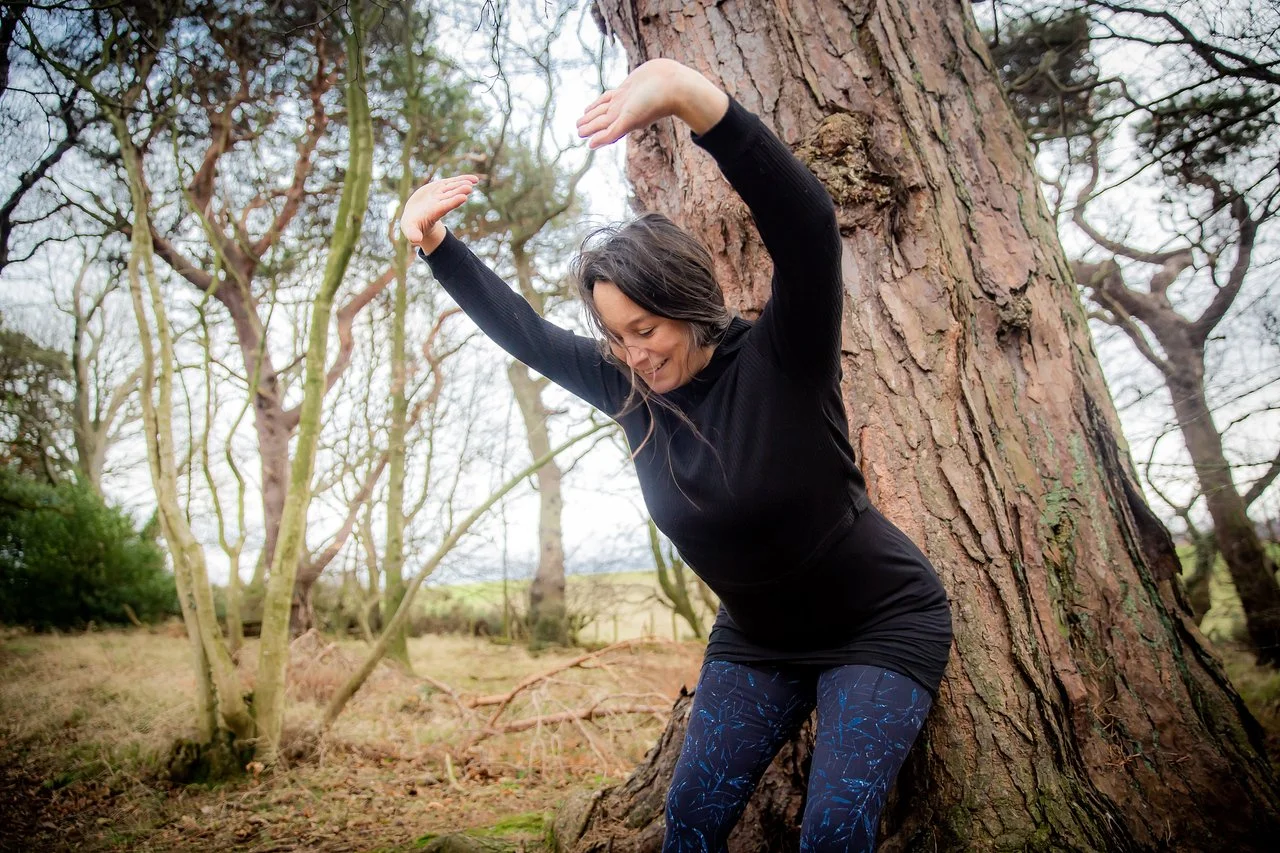
Abby showing that pelvic floor exercises can be done anywhere - this time under a tree
If you’re trying to relax pelvic floor muscles but your symptoms are getting worse instead of better, this might be why.
Pelvic pain, pressure, urgency or discomfort during intimacy are often signs of a hypertonic pelvic floor, not weakness.
There is a quiet misunderstanding in women’s health, that needs addressed in full, but let’s start here.
We have been taught that strong means tight. Engaged. Pulled up. Zipped up. Switched on.
But what if the reason you are in pain is not weakness at all. What if the reason you feel pressure, urgency, or discomfort during intimacy is because your body has been holding on for far to long.
If you are searching how to relax pelvic floor muscles, it might be because strength has not helped. In fact, it may have made things worse.
Let’s talk about that.
When “Strong” Actually Means Too Tight
We live in an always-on culture. we are expected to be always productive, always composed and always holding it together.
Many women bring that same bracing pattern into their bodies, The jaw tightens. The ribs lift or brace. The abdomen pulls in, and the pelvic floor quietly follows.
But a healthy muscle is not one that is constantly contracted. A healthy muscle must shorten and lengthen. It must contract and then it must also be able to fully relax.
If you held your bicep in a curl all day, it would ache. It would fatigue. It would eventually lose coordination and become useless. The pelvic floor is no different.
Strength without release creates a real imbalance. And imbalance creates symptoms.
Learning to relax pelvic floor muscles naturally is not about letting everything drop though. It is about restoring rhythm.
What Is a Hypertonic Pelvic Floor?
A hypertonic pelvic floor simply means the muscles are held in a shortened, tense state for long periods of time.
Imagine that bicep still stuck halfway through a curl. It cannot generate power effectively because it has lost its full range. It feels tired even though it is technically still active.
When the pelvic floor lives in that shortened state, women often experience pelvic pain, difficulty emptying the bladder or bowels, pain during intimacy, or a constant feeling of urgency.
Sometimes there is heaviness too. Sometimes there is also pressure and sometimes there is the strange mix of feeling tight yet unsupported at the same time.
A hypertonic pelvic floor is not a failure not at all. It is usually a protective pattern your body has adopted over time. The nervous system believes it is truly keeping you safe.
But protection that never switches off becomes restriction and often pain.
Why You Should Stop Doing Kegels For Now
This might feel uncomfortable to read.
If a muscle is already tight, repeatedly contracting it will not restore its balance. It will increase compression.
When women with tension are told to squeeze more, symptoms often intensify. Pain can increase, urgency can worsen and pressure can feel heavier. You are doing everything you have been told to do and it is just making you feel worse. This is why, strength requires length first. This is a fundamental principle in physiology your muscles generate force most effectively when they can move through their full range.
If you want to relax pelvic floor muscles safely, the first step is creating space for this to happen. Not adding more squeezes.
This does not mean you will never train strength ever. It means we sequence it properly. Strength is very different from tension and tight and we cannot strengthen a muscle until it can recognise its full dynamic range.
Think of it as length before load.and release before resistance.
The Nervous System Connection
Pelvic floor relaxation is not purely mechanical. It is neurological.
When we live in fight or flight, in the world of ‘GO’ and ‘Try Harder’ the body subtly braces. The breath becomes shallow to try and keep up with the pace. The diaphragm moves less freely it doesn’t have time to fully contract and lengthen and the pelvic floor mirrors that tension.
The vagus nerve, which plays a central role in calming the system, is influenced directly by breathing patterns. And this is magic for your pelvic floor! When breath becomes slow and expansive, the nervous system shifts toward safety. When safety increases, muscle guarding and that awful held tension can soften.
This is why telling someone to “just relax” rarely works.
If you have a hypertonic pelvic floor, the tension may not be conscious. It may be a background hum of vigilance.
Learning to relax pelvic floor muscles therefore begins with your breath and signalling safety, not with force and sheer will-power.
Safe Techniques to Down-Train the Pelvic Floor
We always begin gently.
Diaphragmatic breathing, when done with awareness, allows the ribcage to widen and the entire abdomen to soften. As the diaphragm descends, the pelvic floor responds with a subtle yielding. Not a pushing. Not a bearing down. Just simply allowing.
On the inhale, imagine the breath expanding into the sides and back of your ribs. Feel the perineum gently widen and soften. On the exhale, allow a natural recoil without gripping.
Supported positions can also help. A well-supported child’s pose can reduce spinal load and allow the pelvic outlet to soften. A deep squat may be useful for some women, particularly if mobility allows and there is no acute prolapse concern, because it mechanically opens the pelvic outlet. A perfect exercise for everyone is a really good sit to stand.
The key is no forcing anything, definitely no pushing down and no straining.
To relax pelvic floor muscles is an invitation, not an instruction barked at the body.
The Hypopressive Method for Muscle Length
The Hypopressive method uses specific postures combined with rhythmical breathing and a gentle apnea to create a negative pressure effect inside the abdominal cavity.
Rather than pushing downward, this technique creates a subtle lift of the pelvic organs and tissues. It decompresses instead of compressing.
For women with a hypertonic pelvic floor, this matters. The tissues are given space without voluntary squeezing. The system experiences lift without strain.
The lengthening happens reflexively. The nervous system recalibrates through pressure change rather than force.
This is why many women who struggled with conventional relaxation cues finally feel a shift with Hypopressives. It is not about trying harder to relax. It is about changing the pressure environment so the body can reorganise.
When we teach women to relax pelvic floor muscles using decompressive strategies, we restore coordination. From there, strength can return in a much more balanced way.
Reintroducing Pelvic Floor Strength Without Tension
This is where nuance matters.
Relaxation does not mean abandoning pelvic floor muscle training forever. It means changing how and when you use it.
Once the system begins to soften and breathing improves, we can reintroduce gentle, coordinated pelvic floor work. But it must not come from bracing.
If you have a history of a hypertonic pelvic floor, the cue is not squeeze and hold. The cue is subtle. Rhythmic. Intelligent.
Lying down in the first instance (although I quite like doing this standing in the shower too) visualise the labia closing like heavy velvet curtains. They glide toward each other slowly. Not snapped shut. Not yanked tight. Just gathered with dignity. And then they soften open again.
Or imagine a lift with people inside. The doors close smoothly. There is a pause. Then they open again without force. No clenching. No gripping. Just controlled movement.
The contraction should feel like a gentle drawing inward and slightly upward, coordinated with the exhale. The release should be just as intentional. A full reopening. A complete letting go.
If the release is incomplete, the muscle never regains its full length. If the contraction is aggressive, it reinforces tension.
We are retraining coordination, not chasing any maximum strength goal.
Close. Open. Gather. Soften.
Strength through length.
Why Specialist Guidance Matters
Relaxation can feel surprisingly vulnerable.
If you are someone who has always held yourself together, letting go may feel unsafe. That is not weakness. That is your life history.
There is also a risk of increasing internal pressure if techniques are performed incorrectly. Over pushing, breath holding without guidance, or collapsing posture can reinforce the very patterns we are trying to unwind.
This is why assessment and cueing matter. One to one support allows us to see how your ribs move, how your pelvis sits, how your breath behaves under stress.
Generic online advice cannot see you. It cannot adjust to your scar tissue, your birth history, your menopausal changes, your training load.
If you truly want to relax pelvic floor muscles safely and effectively, personalised guidance accelerates the process and reduces frustration.
You can book a 1:1 session here - Click me!
You can also grab my free breath video here - Click me!
Balance, Not Bracing
True pelvic health is not about holding on harder.
It is about restoring balance between support and release. Between tone and softness. Between effort and ease.
When tension is reduced, strength becomes more intelligent much more sustainable and way more responsive.
If you recognise yourself in these words, you haven’t been doing it all wrong quite the opposite your body has simply been protecting you.
You can book a Relax and Restore consultation with Hypopressive Scotland to assess whether tension is driving your symptoms, or join the foundational Hypopressives course to begin down training your pelvic floor in a safe, structured way.
There is another way to feel in your body.
And it begins with letting go and finding the space again.
Frequently Asked Questions
Can a tight pelvic floor cause constipation?
Yes. If the muscles cannot lengthen during bowel emptying, they can mechanically obstruct the process and make evacuation difficult.
How do I know if I have a hypertonic pelvic floor or just weakness?
Tension often presents as pain, urgency, difficulty starting urine flow, or pain during intimacy. Leakage without pain is more commonly associated with underactivity, though assessment is important for clarity.
Will relaxing my pelvic floor make me leak?
No. Appropriate relaxation improves coordination. A muscle that can fully lengthen can also contract more effectively when needed.
How long does it take to release pelvic tension?
Some neurological shifts can occur quickly when safety increases. Long standing patterns require consistent retraining.
Can Hypopressives help with pelvic pain?
Many women report reduced pain as circulation improves and internal pressure is better managed. Individual outcomes vary, and personalised assessment is always recommended.