Can Hypopressives Help with Prolapse?
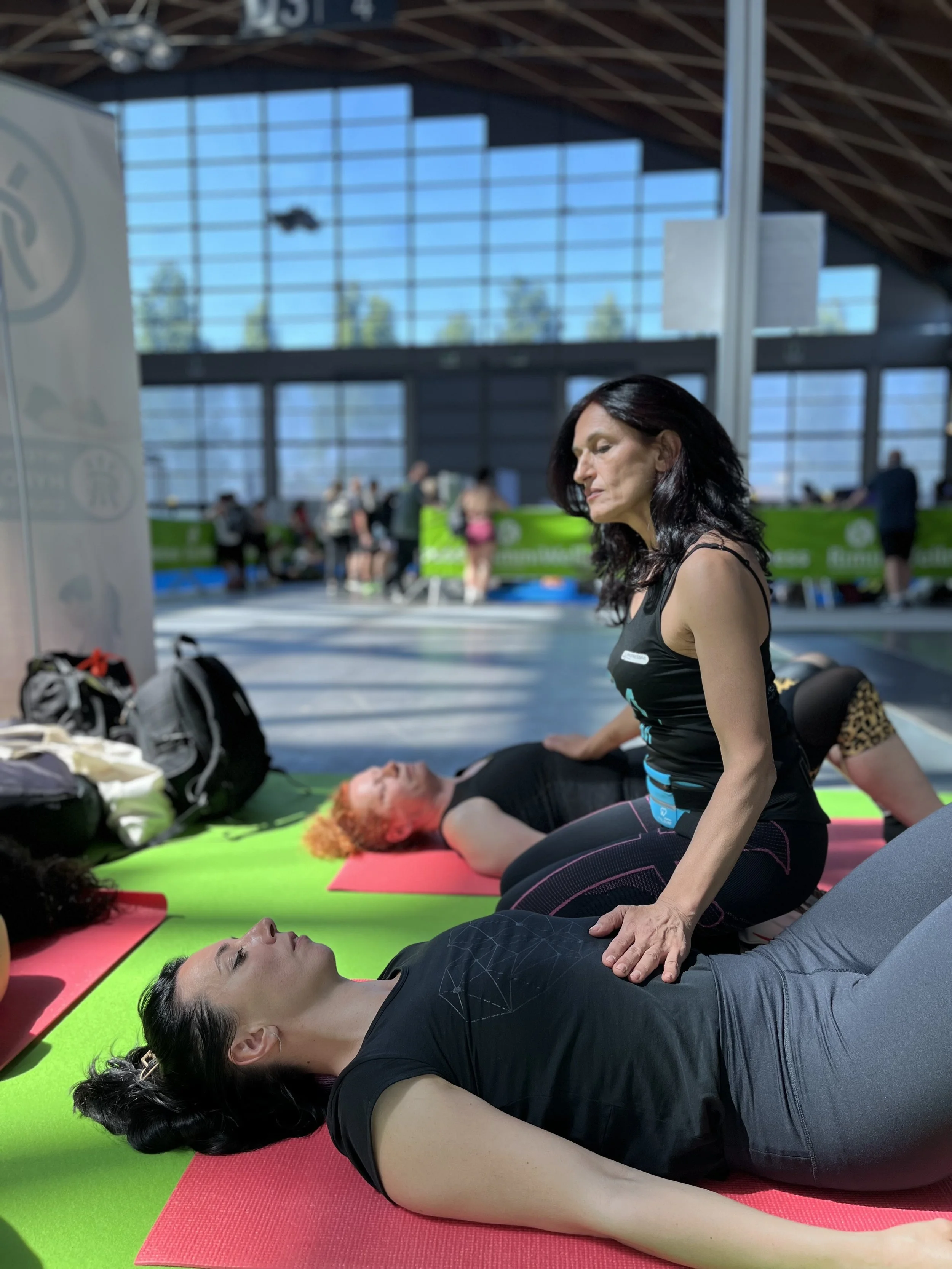
Pelvic floor specialist guiding a woman through gentle breath and posture work for prolapse support in a calm studio setting
Natural Support for Bladder, Uterus and Bowel Health
You’re life is not over and you are not alone
If you are living with prolapse symptoms, you may know the feeling well: heaviness, dragging, bulging, leaking, pressure, or the sense that something is just not sitting where it used to. For many women, it can feel worrying, embarrassing and deeply unsettling. Which is why it takes a woman on average 7 years to ask for help.
Pelvic organ prolapse is common. It can affect the bladder, uterus or bowel, and symptoms are often worse after standing for long periods or later in the day.
Many women are told to “just do pelvic floor exercises” or, if symptoms continue, to think about a pessary or surgery. Pelvic floor muscle training does have evidence behind it when it is properly assessed, supervised and matched to the individual.
But real life is often very different from guideline language. Access to pelvic health physiotherapy is uneven, and many women are left trying to work things out alone. Some end up gripping with the glutes, adductors, abdominals or hip flexors. Some hold their breath. Some bear down without realising it. And some are trying to strengthen a pelvic floor that may already be overactive, tense or poorly coordinated.
This is why a broader conversation matters. Prolapse is not just a weakness story. It is also a pressure story, a breath story, a posture story and, often, a nervous system story.
Understanding Bladder, Uterus and Bowel Prolapse
Pelvic organ prolapse happens when one or more of the pelvic organs descend from their usual position and press into the vaginal walls.
This may involve:
the bladder at the front
the uterus in the middle
the bowel at the back
Common causes and contributing factors include pregnancy and childbirth, ageing, menopause, chronic constipation and straining, chronic cough, heavier loading, body weight, scar tissue and previous pelvic surgery.
Symptoms can include:
heaviness or dragging
a bulge or “something coming down”
bladder leakage
difficulty emptying the bladder fully
constipation or difficulty emptying the bowels
symptoms that feel worse at the end of the day or after more load
Many women are searching for female prolapse treatment or uterine prolapse treatment that is non surgical, because what they really want is not a quick fix. They want to understand what is happening, why it feels worse some days than others, and whether there is a gentler way to support the body.
The Real Issue Is Not Just Weakness
One of the biggest misunderstandings around prolapse is the idea that it is simply caused by a weak pelvic floor that needs more squeezing.
The pelvic floor does not work in isolation. It responds to the diaphragm, the rib cage, the abdominal wall, posture, movement and pressure. If pressure is repeatedly driven downwards through breath holding, abdominal bracing, straining on the toilet, poorly managed lifting or chronic coughing, the tissues underneath can be placed under more strain over time.
This is also where the human side matters.
Pelvic floor muscle training can be helpful when it is properly assessed, individually taught and progressed well. But many women do not get that experience. Some are given a leaflet. Some are told to squeeze without anyone checking whether they are actually finding the pelvic floor, whether they can relax it afterwards, or whether other muscles are taking over instead.
That matters even more for women with an overactive or non-relaxing pelvic floor. In those cases, more gripping may not benefit at all and may aggravate symptoms instead. So the issue is not whether pelvic floor muscle training is good or bad. The issue is whether it is the right tool, taught in the right way, for the right person.
How Hypopressives Create Lift Without Force
Hypopressive exercises are a breath-led and posture-led method. They are usually taught through specific body positions, a relaxed exhale, and a brief breath pause with rib cage expansion.
The goal is not to force the body, clamp the belly or grip harder. The intention is to improve pressure management, trunk organisation and reflexive support through the abdominal wall and pelvic floor.
That is one reason many women find hypopressive training very different from standard squeeze and hold cues.
When taught well, hypopressives may help by:
reducing symptom-provoking pressure patterns
improving rib cage and diaphragm movement
encouraging more reflexive support rather than forceful gripping
reconnecting posture, breath and pelvic support as one system
creating a calmer entry point for women who tend to brace or overwork
Careful wording matters here. Hypopressives are not a miracle cure for prolapse and the evidence points to them being on a par for many with pelvic floor muscle training. They absolutely help many women with prolapse symptoms, especially where pressure management, posture, breath and bracing patterns are part of the picture.
Can Hypopressives Help with Prolapse
Yes, they do help many women, but they should be talked about honestly.
Hypopressives support prolapse symptoms by helping the body manage load and pressure better. For many women, this may mean:
less downward pressure through the abdomen and pelvis
better rib and diaphragm movement
improved postural organisation
less bracing and gripping
improved awareness of how to move, lift and breathe without bearing down
This can be particularly useful for women who feel that standard pelvic floor cues have not helped, have made them more tense, or have never truly been explained in a way their body could understand.
Hypopressives are not a quick fix. They are not a replacement for assessment where assessment is needed. But they can be a valuable part of pelvic floor exercises for prolapse, especially for women seeking a gentler, non-surgical and more whole-body approach....If you are looking for hypopressive exercises or a more structured way to begin, you can explore my beginner hypopressive course.”
Why More Squeezing Is Not Always Better
Pelvic floor muscle training has evidence behind it, especially when it is supervised and tailored to the individual.
But that word matters: supervised.
In the real world, many women are not shown how to do it well. They may not be assessed properly. They may not know whether the pelvic floor is underactive, overactive or poorly coordinated. They may not realise they are breath-holding or gripping with other muscles instead.
And because specialist pelvic health physiotherapy can be difficult to access quickly, many women are left to self-manage for months. And many never go because of the ongoing stigma surrounding pelvic floor dysfunction.
So while pelvic floor muscle training may work well in principle, it may not work well in practice when:
the wrong muscles are taking over
the breath is restricted
the abdomen is braced
the pelvic floor is already tense
there is no individual coaching or follow-up
we still hold so much shame around the issue
This is where hypopressives offer something different. Rather than starting with forceful contraction, they begin with breath, posture, rib mobility, pressure management and reflexive support.
That does not mean Kegels are wrong and hypopressives are right. It means women need more than a generic instruction to squeeze. They need assessment, skilled support and an approach that matches their body. If you want help understanding your own pressure patterns, posture and pelvic floor coordination, you can book a 1:1 pelvic floor assessment.
After Birth and Through Menopause
Prolapse symptoms often become more noticeable after birth and through peri-menopause and menopause.
After childbirth, tissues may be stretched, scarred, fatigued or still recovering. Through menopause, hormonal changes can affect tissue resilience and support.
This is why a good postnatal workout plan, postpartum, perimenopause and menopause physiotherapy pathway should never be built on pressure and force alone. It should look at:
breath mechanics
recovery from birth
bowel habits and straining
posture and loading
symptom response across the day
whether the pelvic floor needs activation, release or coordination
Hypopressives can sit well here as part of post pregnancy physio, post natal physio support and during the crazy years of perimenopause and menopause where our bodies don’t know whether they are coming or going. Especially when the aim is to restore confidence, reduce pressure and reconnect with the body gently.
Why Stress Can Make Prolapse Feel Worse
Stress does not usually act as the only cause of prolapse, but it can be a meaningful contributing factor. The established risk factors for prolapse include pregnancy and childbirth, ageing and menopause, chronic constipation and straining, persistent cough, heavier loading, body weight and previous pelvic surgery. But stress can sit underneath many of the patterns that make the pelvic floor’s job harder. It can increase bracing, breath-holding and muscle tension, reduce rib cage mobility, disturb bowel habits, and make the abdomen and pelvic floor grip more. If that is layered on top of coughing, constipation, heavy lifting or repeated impact, the overall load on the pelvic floor may rise and symptoms may worsen.
Hypopressives can be a useful bridge here because they invite slower breathing, better rib movement, more body awareness and less force. Current evidence suggests they may be genuinely helpful for some women with pelvic floor dysfunction. Comparative studies are mixed: some favour pelvic floor muscle training, while others show hypopressives can offer similar value. So the honest position is not that hypopressives are better in every case, nor that they are second best. It is that they can be a useful option within a thoughtful, individual approach.
For some women, symptom support also benefits from regulation work, and you can explore TRE and somatic nervous system support.
More Than YouTube Exercises
There is a reason specialist guidance matters.
With any prolapse-friendly exercise approach, technique matters. Too much force, too much breath holding, the wrong rib position, or repeated bearing down can all make symptoms worse rather than better.
This is why DIY exercise videos are not always enough. They cannot tell whether you are compensating with the glutes, pulling with the hip flexors, clenching the jaw, over-lifting the chest, or strengthening a pelvic floor that first needs release.
If you are searching on google for any of these: pelvic floor therapist near me, pelvic floor specialist near me, pelvic floor physiotherapist, pelvic floor therapy near me, pelvic floor physiotherapy Edinburgh or pelvic floor therapy Edinburgh, what matters most is not just finding someone with the right words on their website. It is finding someone who can assess the whole picture. That is the whole of you, because you are so much more than just your pelvic floor!
Hypopressive and Pelvic Floor Support in Edinburgh and Scotland
If you are in Edinburgh, East Lothian or elsewhere in Scotland and looking for in person support (although women have travelled from Ireland, the USA and further afield too) my work is designed to bridge the gap between generic advice and the individual guidance many women are missing. I do also work online via zoom.
That means looking at:
how you breathe
how you manage pressure
how you stand, move and lift
whether you are bracing or gripping
whether your pelvic floor needs more activation, more release, or better coordination
how stress and nervous system load may be affecting symptoms
I use hypopressive training as part of that wider picture. Not as a gimmick. Not as a miracle cure. But as a structured, breath-led approach that may help some women reduce pressure, reconnect with support and move with more confidence.
If you are looking for any of these in your searches within the net: hypopressive training near me, hypopressive training online, hypopressives online training or a supportive hypopressive course, the aim is always the same: to help the body organise itself better from the inside out.
You Deserve Support Not Silence
Prolapse is common, but that does not mean you have to ignore it.
Pelvic floor muscle training can be very effective when it is properly assessed, supervised and matched to the individual. But many women never receive that level of support, and some are left doing exercises that do not suit their body at all.
That is why gentler, more individual and more whole-body options matter.
With the right guidance, breath, posture and pressure work can become part of real symptom support. Hypopressives are not about forcing the body to hold itself together. They are about helping the body find better organisation, better support and, often, a little more trust again.
You are not something that is broken. You do not need to grip harder and hope for the best. And you deserve more than silence, guesswork or a vague instruction to squeeze.
FAQ
Can hypopressives cure prolapse?
No exercise method can honestly be described as a guaranteed cure for prolapse. Hypopressives have helped many women manage symptoms by improving pressure management, posture and breath coordination, but they should not be sold as a miracle fix.
Are hypopressives better than Kegels for prolapse?
Current evidence suggests hypopressives may be genuinely helpful for some women with pelvic floor dysfunction. Comparative studies are mixed: some favour pelvic floor muscle training on certain outcomes, some show similar value, and some report morphological changes that favour hypopressives, including greater improvement in levator ani muscle thickness in one postpartum study. So the honest position is not that hypopressives are always better, nor that they are second best. It is that they can be a useful option within a thoughtful, individual approach.
Why do pelvic floor exercises sometimes make symptoms feel worse?
Sometimes the issue is not simply weakness. A woman may be breath-holding, bearing down, gripping with surrounding muscles, or already dealing with an overactive pelvic floor. In those cases, generic squeezing may not help and can aggravate symptoms.
Can I do hypopressives at home for a prolapsed uterus?
You may be able to practise some elements at home, but it is best to learn with skilled guidance first. Technique matters. If the breath, rib movement or posture are off, symptoms may be aggravated rather than supported.
Do I still need a pelvic floor physio?
In many cases, yes, pelvic health physiotherapy can be a very helpful part of care. But access can be delayed, which is one reason many women seek additional specialist support while they are waiting.
Can hypopressives help after birth or in menopause?
They may. Because they focus on pressure, posture and breath rather than force alone, they can be a useful part of support after birth and through peri-menopause and menopause, especially when symptoms are influenced by bracing, poor pressure transfer or loss of confidence with movement.
Looking for gentle prolapse support in Edinburgh or online?
If you are dealing with heaviness, dragging, bulging, leaking or the feeling that standard pelvic floor advice has not truly helped, you do not have to work it out alone.
I offer breath-led, trauma-informed pelvic floor support that looks at the full picture: posture, pressure, rib movement, nervous system load and pelvic floor coordination.
You can:
book a 1:1 assessment for individual support
explore my hypopressive course for guided breath and posture work
find pelvic floor support in Edinburgh or online if you want a gentler, more whole-body approach
The aim is not to force your body to hold itself together.
The aim is to help it find better support, with less pressure and more trust. You can book a 1:1 pelvic floor assessment,explore my beginner hypopressive course, or learn more about TRE and somatic support.