Beyond Kegels: Why Your Postnatal Workout Plan Might Be Missing the Pelvic Floor
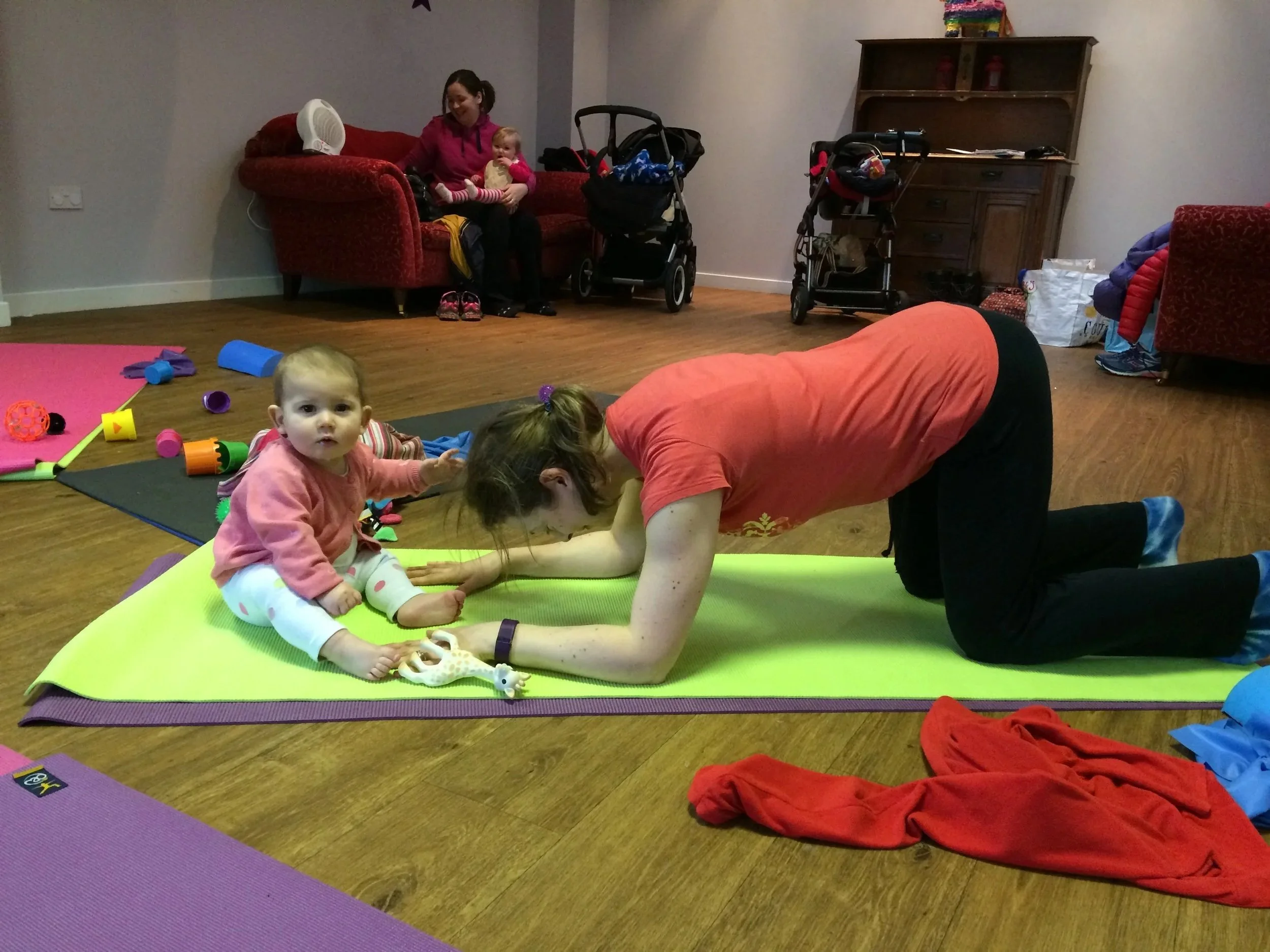
Mums and babies class in Haddington, East Lothian
You have been told to do your Kegels.
You have squeezed in the car, at the sink, in the school pick-up queue, even waiting in line at the supermarket.
You have tried to be good. Tried to be consistent. Tried to trust that if you kept switching on your pelvic floor, eventually everything would click back into place.
And yet, for many women, sadly it does not.
They are months into postpartum, sometimes much, much longer. They have been cleared for exercise at a derogatory 6 week check (where no one actually checked anything, and in some places if this is a second baby, they may not be checked at all), but they still feel wobbly underneath. They leak when they jog for the bus. They notice heaviness by the end of the day. Their tummy domes when they try to do stronger core work. They lift the buggy, the baby, the shopping, and something still feels missing.
This is where many postnatal women hit what I call the Kegel ceiling.
A voluntary squeeze can be useful, but it is only one small piece of pelvic floor function. Your pelvic floor is not designed to survive motherhood through gripping alone. It is part of a pressure system, a breathing system, and a movement system. It needs to respond, rebound, soften, support, and organise itself reflexively. That is why a good postnatal workout plan has to go beyond repetitive contractions and look at how the whole body is managing load, breath, and recovery.
This is where the Hypopressives Method can offer something different.
When Pressure Keeps Winning
One of the biggest reasons women keep training and still do not feel better is that no one has properly explained pressure.
I often think of the body like a tube of toothpaste. If there is a lot of force pushing downward and the system underneath is not ready to receive it, something has to give. That might show up as leaking, vaginal heaviness, abdominal doming, coning through the midline, or that strange sense that your body is not quite gathering or holding itself well.
Traditional core exercises can sometimes stir this up. Crunches, long held planks, double leg lowers, rushed HIIT, and even heavy lifting done too soon can drive force down into a system that is still healing.
This does not mean exercise is dangerous, exercise when done in the right way is actually essential. It means timing and strategy matter.
A body that has been through pregnancy and birth often needs space way before it needs intensity. It needs coordination before it needs challenge. It needs to learn how to spread and manage force, not just brace against it.
If you are noticing heaviness, leaking, doming, or uncertainty about how to train, this is often the point where more general fitness advice stops being enough and specialist postnatal support starts to properly matter.
Beyond the Squeeze
This is where the conversation starts to shift and become super interesting.
The pelvic floor does not only work when you tell it to. In daily life, much of its job is reflexive. Which means it responds to breathing, posture, foot pressure, the movement of the rib cage, the position of the spine, and the split-second changes that happen when you cough, laugh, lift, or land.
That is why simply squeezing harder is not always the answer. And can sometimes make everything just feel worse.
The Hypopressives Method works from a different angle. Rather than asking the body to clamp down, it uses posture, breath mechanics, rib expansion, and carefully taught apnoea to create a balanced-pressure environment in which the trunk can reorganise. The aim is not brute force. The aim is better reflexive support, better pressure control, and a feeling that the body is quietly lifting and gathering and supporting from the inside.
This is one reason Balanced-pressure, breath-led pelvic floor work can feel so different from standard postnatal core work. Women often describe feeling lighter, longer, steadier, and more connected. Not because they have been told to squeeze more, but because the system has started to coordinate more intelligently.
That distinction really matters.
There is a difference between squeezing strength and resting tone. There is a difference between gripping and support. A well-functioning pelvic floor is not one that is permanently braced. and on It is one that can yield, recoil, and respond at the right time.
Healing the Gap Means More Than Closing the Space
The same principle matters for diastasis recti repair.
Many women are taught to obsess over the width of the gap, but healing is not only about bringing the edges closer together. It is about how the abdominal wall behaves under load. Can it tension well? Can it transfer force? Can it respond without doming or bulging?
In practice, that means your postnatal core work needs to restore deep support, not just flatten the stomach. With the Hypopressives Method, the lateral rib cage expansion, spinal lengthening, and whole-canister organisation can help women reconnect with the deeper abdominal system, especially the relationship between breath, trunk tension, and pelvic support. The effect is often less about pulling in and more about the body drawing together with better timing and less strain.
It is a quieter kind of strength.
Not at all flashy.
But deeply useful.
If you are also navigating abdominal separation, scar tissue, or that sense that your middle no longer feels like home, 1:1 coaching with Hypopressives Scotlandcan help you work with your body in a more tailored way.
The Missing Link Before Impact
This is the bit that so many women need.
They do early rehab. They walk. They try a few pelvic floor exercises. Then, because life is busy and babies grow quickly, they jump straight towards running, bootcamp, lifting, or high-energy classes. Somewhere in that jump, the middle gets missed.
That middle of the story matters.
Before impact, the body needs to show signs that it can manage force well. Can you cough without leaking or bearing down? Can you carry the car seat without breath-holding and pushing into the pelvic floor? Can you lift your child and feel length through your spine rather than collapse and strain? Can your abdominal wall stay responsive under effort?
This is why I often see Hypopressives as a bridge. They can sit beautifully between early recovery and the return to more demanding training. They prepare the body for the realities of motherhood and movement. They help a woman build reflexive strength before she asks her body to absorb faster, heavier, or more chaotic forces.
That is what makes them such a useful part of a safe return to exercise after baby.
If you are craving a clearer path back to strength, our postnatal workshops and classes can give you structure without throwing you in too fast.
A 15-Minute Ritual That Can Actually Fit Real Life
Most mums do not need another impossible routine.
They need something they can fold into ordinary life. Something they can return to even when sleep is patchy and the washing machine is already on its third cycle.
A short Hypopressives practice can work beautifully here. No equipment. No need for a perfect hour. Just a small pocket of time to breathe, lengthen, widen the ribs, and remind the body how to organise itself again.
That is often far more powerful than one heroic session done once a week and forgotten.
For busy women, micro-dosing matters. Five mindful minutes in the morning. A few postural resets while the kettle boils. A short guided session during nap time. This is one reason online core rehab for mums can be so effective. It brings consistency within reach.
Why Specialist Guidance Matters
The technique matters here.
A poorly taught abdominal vacuum can become another way of gripping, bearing down, or yanking the stomach in. That is not what we want. Postnatal recovery deserves more care than that. The needs of a woman after a vaginal birth may also differ from the needs of a woman recovering from a C-section, particularly when scar tissue, abdominal tenderness, or altered sensation are part of the picture.
This is where specialist support becomes valuable. Working with a postnatal exercise specialist in Scotland, or joining Hypopressives classes in Edinburgh or online, can help you learn the method safely and feel what your body is actually doing, rather than guessing and hoping.
A Different Kind of Strength
Your postnatal recovery should not be about working harder.
It ought to be about becoming better organised from the inside out.
When your core works reflexively, support stops feeling like something you have to force. It starts to feel more natural. More available. More trustworthy. You breathe and your body responds. You lift and you feel less drag. You move and things feel quieter underneath.
That is the shift so many women are missing.
If your current postnatal workout plan still revolves around more squeezing, more bracing, and more effort, it may be time to look at what is happening underneath the surface.
The Hypopressives Method offers a way to reconnect with your core that is intelligent, low pressure, and deeply practical for motherhood.
Ready to move beyond Kegels? Join our Postnatal Power Workshop or explore 1:1 coaching with Hypopressives Scotlandto rebuild your core safely and confidently.
Frequently Asked Questions
How soon after birth can I start Hypopressives?
Usually after your 6-week GP check for a vaginal birth and 12 weeks for a c-section, although very gentle breathing and awareness work may begin earlier with appropriate guidance.
Can I do these after a C-section?
Yes. They can be a very supportive way to reconnect with the abdominal wall, breath, posture, and scar-aware recovery, but they should be introduced thoughtfully and with individual guidance where needed. And only post 12 weeks and if your scar is healing well.
What if I already do Pilates?
Pilates can be excellent. Many women simply find that Hypopressives add another layer by improving reflexive lift, breathing mechanics, and pressure control alongside their existing training.
Do I have to do the vacuum to see results?
Not always, it isn’t essential. Posture, rib expansion, and breath-led coordination alone can improve how your trunk and pelvic floor work together. The apnoea can be powerful, but it is not the only useful ingredient.