How to Keep Strengthening Your Pelvic Floor Once You Start Seeing Results
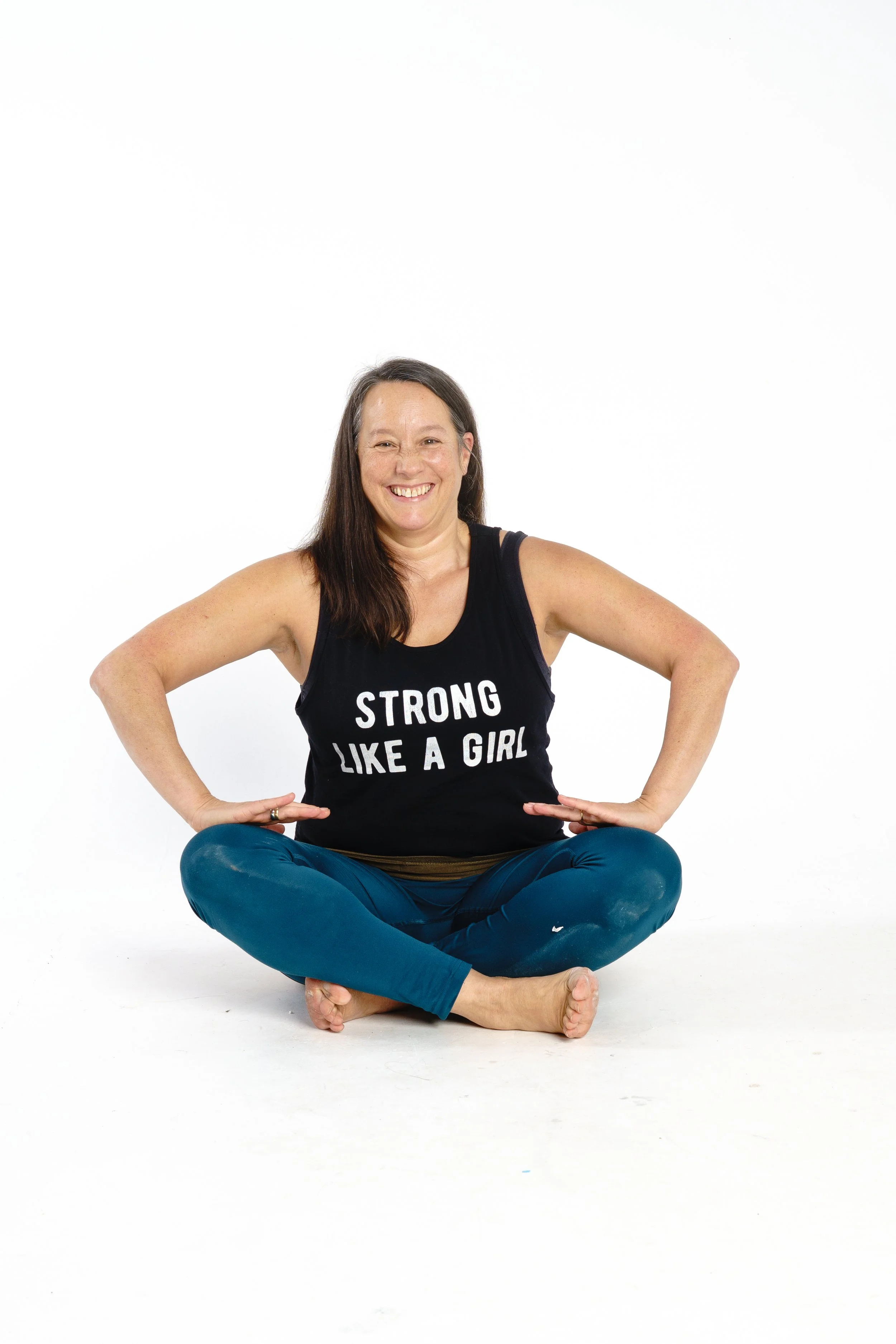
Abby Lord practicing Hypopressives for pelvic health
Seeing those first signs of progress can feel huge.
Maybe you are leaking less on walks. Maybe that dragging, heavy feeling has eased. Maybe your posture feels more open and your body more connected. These are not small wins. They are early signs that your system is starting to organise itself differently.
But this is also the point where many women quietly wonder, now what?
The truth is, pelvic health is not something we “fix” once and forget. It is something we build, maintain, and refine over time. The Hypopressives Method is not just a short rehab phase. It is a way of training your body to manage pressure more intelligently, organise posture more efficiently, and support pelvic floor strengthening as part of everyday life.
Beyond the first 8 weeks
The early phase of Hypopressives for many brings noticeable changes quite quickly. That can include less leaking, less heaviness, better awareness of posture, improved breath mechanics, and a stronger sense of support through the abdomen and pelvis.
That early progress matters. But it is only the foundation.
Your pelvic floor is not designed to work only when you consciously think about it. It is part of a reflexive pressure-management system that includes the diaphragm, abdominal wall, rib cage, spine, fascia, and the rest of the body. The aim is not to keep squeezing harder. The aim is to help the body respond more automatically and more efficiently. The International Hypopressives Council describes the method as a system of respiratory and postural re-education that progresses from foundational patterns into more complex sequences, with applications in pelvic health, posture, athletic performance, and pressure management.
That is where long-term change lives.
The science of automaticity: retraining reflexes
One of the biggest misunderstandings in pelvic health is the idea that stronger always means more conscious effort.
It does not.
There is a difference between a voluntary contraction and a system that can respond reflexively when you cough, lift, run, or change direction. Real life does not usually give you time to “remember” your pelvic floor. Your body needs to organise itself for you.
That is why consistency still matters even after symptoms reduce.
The Hypopressives Method uses breath, posture, active lengthening, and apnoea-based organisation to improve how the whole canister behaves. This is one of the reasons many women notice that support begins to feel less forced and more natural over time. Professional hypopressive frameworks also place progression within a broader whole-system approach that includes postural re-education, breathing mechanics, and myofascial work rather than isolated squeezing alone.
When you stop altogether, old habits can creep back in. Rib flare may return. Breath can climb back into the chest. You may brace through the upper abdominals, bear down under load, or lose the subtle lift and recoil that was beginning to become more automatic.
This is why we keep practising. Not because you are broken, but because the body responds beautifully to regular signalling.
Progressing the postures: from static to dynamic
Once you are seeing results, the next step is not to throw yourself into the deepest end. It is to progress intelligently.
That often means moving from more supported positions into ones that ask more of your balance, posture, and control and we start to load and that load helps us to become more functional.. Supine can become seated. Seated can become standing. Standing can become asymmetrical. Arm variations can increase fascial tension and challenge the trunk in new ways. Over time, apnoea duration can also be progressed carefully and appropriately.
This mirrors how professional hypopressive education is structured. The IHC describes training that begins with foundational posture and breathing patterns and then develops into more complex sequences involving movement, active lengthening, and the uplifted breathing technique.
For me, this is where things get exciting.
This is where you stop simply “doing your rehab” and start building a body that can adapt. A body that can organise under challenge. A body that can meet life, sport, motherhood, menopause, and movement with more resilience.
Integrating Hypopressives into mainstream training
This is also the stage where Hypopressives become incredibly useful beyond symptom management.
If you are returning to running, CrossFit, strength training, hiking, tennis, or just a busier physical life, you do not leave your pelvic floor work behind. You bring it with you.
A short Hypopressive reset before or after a run can help you reconnect to rib position, spinal lift, and breath mechanics. Before strength work, it can remind the body how to manage load without dropping into unnecessary downward pressure. In daily life, auto-elongation can become part of how you stand, carry, reach, and move.
That matters because mismanaged intra-abdominal pressure is often where symptoms begin to creep back in. The IHC explicitly positions hypopressive training as a method that can complement health, fitness, and sport settings while helping prevent dysfunction or injury linked to poor pressure management.
This is why I often describe Hypopressives not just as rehab, but as a protective warm-up for life.
Respiratory gains: training the diaphragm for endurance
One of the loveliest things about this work is that the wins are not only pelvic.
As rib cage mobility improves, many women notice they can breathe more fully, recover more quickly, and feel less held through the chest, neck, and jaw. Diaphragm mobility and pelvic mobility are deeply linked. If the rib cage is rigid, the whole pressure system becomes less adaptable.
Hypopressive training is also described by both IHC and related breath-led core approaches as supporting respiratory capacity, postural efficiency, and broader core function. The Core Recovery Method likewise frames hypopressive training as part of a wider system for posture, breathing, organ support, and reflexive deep core strength, with progression across beginner, intermediate, and advanced levels.
For active women, that can translate into better endurance, better recovery, and a stronger sense of internal support.
For many women, it also supports nervous system regulation. And when the nervous system feels safer, the body often moves with less gripping, less guarding, and more ease.
The three-times-a-week rule
In the beginning, daily practice can be brilliant. It helps you learn. It helps you feel. It helps you interrupt old patterns quickly.
But long term, maintenance does not need to mean hours.
For many women, a realistic rhythm is 15 to 20 minutes, three times a week. That is often enough to keep the system online, especially when it is paired with small daily moments of awareness. A morning vacuum. A standing reset while the kettle boils. A few breaths before a run. A quick postural check before lifting.
This is where micro-dosing wins.
Regular short practice tends to beat the all-or-nothing pattern every time. The Core Recovery Method and also Abby Lord even structure their programmes around consistent, manageable practice blocks and notes that those blocks can be broken into shorter increments across the day.
That is also where Hypopressives Scotland online becomes so helpful. Structure creates consistency. Consistency builds adaptation. Adaptation becomes habit.
And habit is where results last.
Seasonal shifts: menopause and pelvic health
There is another reason maintenance matters: your body is not static.
Hormones change. Recovery changes. Tissue quality changes. Training demands change. Life stress changes.
In menopause, oestrogen decline can affect tissue elasticity, comfort, and recovery. That does not mean decline is inevitable. It does mean your body may benefit even more from regular decompression, efficient breath mechanics, intelligent posture, and low-pressure training.
The IHC specifically includes perimenopause and menopause among the areas where hypopressive work may be supportive, alongside postural habits, respiratory function, and pelvic health.
So if you are managing prolapse long term, returning to impact after babies, or navigating the shifts of midlife, this is not a reason to stop. It is a reason to keep going in a way that is steady, smart, and sustainable.
Final thoughts
Your pelvic floor is not a problem to fix and forget.
It is a system to train, support, and protect across every season of life.
You have already done the brave part. You started. You listened to your body. You built the foundations. Now the work is to keep those foundations alive so they become part of how you breathe, stand, move, lift, run, and live.
That is where the real magic is.
Ready to level up? Join our Intermediate Flow Classes , or the new Advanced course that is coming or book a Progress Review with the team at Hypopressives Scotland, and let’s help you maintain your results safely, confidently, and for the long term.
FAQs
Do I still need to practise if I have no symptoms?
Yes. Maintenance helps prevent regression, especially when exercise intensity increases, stress rises, or hormones shift.
Can I progress if I have mild prolapse?
Yes, usually with the right guidance, smart progressions, and good pressure management.
How do I know if I am progressing correctly?
Look for more ease in daily life, better posture without forcing it, improved breath expansion, and a sense of reflexive support rather than constant gripping.
What if I miss a week?
Do not panic. Resume your short routine and rebuild the rhythm. The aim is consistency over time, not perfection.
References used for framing and progression context: International Hypopressives Council overview of the Multidisciplinary Hypopressive Method and its progression model; Hypopressives Scotland site messaging on progression and client support; The Core Recovery Method overview of consistent, structured breath-led core training.