Internal Rectal Intussusception, Rectal Pressure & Prolapse

An illustrative image of the rectal sling
Can You Still Do Hypopressives?
If you have recently been told you have internal rectal intussusception, or you are experiencing rectal pressure and incomplete emptying, you may have found yourself down an internet rabbit hole late at night.
Massive life changing words like prolapse, obstruction and surgery can leave you feeling scared and frightened. And this is a place i really don’t want you to be.
A woman recently asked me, anonymously, whether she could continue Hypopressives after being diagnosed with internal rectal intussusception. She was not in pain. She was not obstructed. She described rectal pressure, a sense of incomplete emptying, and occasionally needing to press on her perineum to finish a bowel movement. She also noticed she felt better when she was more relaxed.
If that sounds familiar, this is for you. It is also for you if you just want to learn a little bit more.
What internal rectal intussusception actually means
In adults, internal rectal intussusception refers to a folding of the rectal wall into itself during straining. It remains internal. It is different from full rectal prolapse, where tissue protrudes externally.
It is also different from a rectocele, although the two can coexist. A rectocele is a form of posterior vaginal wall prolapse where the rectum bulges forward into the vaginal wall.
In the UK, internal rectal intussusception is often managed conservatively unless there is clear obstruction or severe, persistent symptoms. Many women are monitored rather than operated on. The diagnosis itself does not automatically mean that you have to have surgery or even that it is necessary.
That matters. Because the word can sound more dramatic than the lived reality.
When rectal pressure and incomplete emptying take centre stage
If you are searching for “rectal pressure incomplete emptying women” or “internal rectal intussusception treatment UK,” what you are likely trying to understand is this feeling:
The stool is there. You can feel it. But it does not move easily.
Sometimes you may press on the perineum or the back wall of the vagina to help it pass. Sometimes you feel heaviness, dragging, or sagging.
This is often called splinting. It is more common than many people will admit. With many who do it keeping it completely secret over the course their whole life time.
The important thing to understand is that bowel emptying is not a pushing event. It is a coordinated release. The pelvic floor must soften and lengthen at precisely the right moment. If it tightens instead, or does not relax fully, the sensation can mimic blockage even when the bowel above is not severely obstructed.
The detail that symptoms improve when you are relaxed is not small. It is actually really significant. The nervous system and the pelvic floor are deeply connected. When the body feels safe, muscles release more easily. When the body is braced, emptying becomes harder.
This is where many women’s stories live, somewhere between structure and coordination.
Is this prolapse?
Sometimes yes. Sometimes partly. Sometimes not in the way you fear.
Pelvic organ prolapse is an umbrella term. Posterior prolapse includes rectocele. Rectal prolapse is different again. Internal rectal intussusception sits within that broader conversation but does not automatically mean the rectum is externally prolapsing.
Imaging findings do not always match symptom severity. Two women can have very similar scans and feel entirely different.
A diagnosis describes tissue behaviour during a specific test. It does not describe how well your pressure system coordinates day to day.
A Small but Powerful Muscle: The Puborectalis
There is a muscle most women are never taught about, yet it plays a central role in bowel emptying.
It is called the puborectalis.
The puborectalis forms a sling around the rectum, attaching from the pubic bone and looping behind the bowel. When it contracts, it creates a bend between the rectum and the anal canal. This bend, known as the anorectal angle, helps maintain continence. It keeps things in when you are upright, moving, or lifting.
When you go to empty your bowels, that sling must soften and lengthen. The anorectal angle gently straightens. The pathway opens.
If the puborectalis does not relax fully, or if it tightens reflexively due to stress, fear, or habitual gripping, the angle remains more closed. You can feel as though stool is stuck at the outlet. You may strain. You may press on the perineum to assist.
From the outside, this can feel like a structural problem. But often it is a coordination problem.
And coordination can absolutely be retrained.
This is why relaxation, breath, and pressure distribution are just as important as strength when we are addressing rectal pressure and incomplete emptying in women.
Research note: The role of the puborectalis in maintaining and altering the anorectal angle during continence and defecation is well described in colorectal and pelvic floor literature (Rao SSC, Gastroenterology Clinics of North America, 2008; Felt-Bersma et al., Gut, 1990s).
This is also where breath-led work becomes relevant. When the diaphragm moves well and intra-abdominal pressure is distributed evenly rather than driven downward, the pelvic floor does not need to grip defensively. Coordinated rib expansion and controlled pressure modulation can support the pelvic floor’s ability to both engage and release at the right time, which is essential for comfortable bowel emptying
Where Hypopressives sit in this picture
If you are medically stable, not obstructed, not in acute pain, and appropriately monitored, there is usually no automatic reason to stop Hypopressives.
Properly coached Hypopressives are not straining exercises. They are not bearing down. The apnoea is rib-led and controlled. The pressure changes remain within physiological ranges that your body experiences during normal breathing, movement, coughing, and standing up.
The question is not whether you can or cannot do HypopressivesThe question is how your body responds.
If your practice (learnt with a qualified Hypopressives instructor trained by Abby Lord) leaves you feeling more pressured, more blocked, or more symptomatic, then that is information. It may mean the timing needs adjusting, or that pelvic floor relaxation work needs prioritising first.
If practice feels neutral or supportive, that is information too.
For some women with posterior prolapse or outlet-type symptoms, improving diaphragm mobility and pressure distribution can actually reduce downward loading. For others, the first step may be learning to release rather than lift.
It is rarely black and white. You are an amazing construct of nature and are utterly unique, so the way your body responds to Hypopressives will be unique to you. But the million dollar question is always…
Can women improve?
Yes. Many do.
When symptoms are driven largely by coordination issues, pelvic floor overactivity, or poor pressure distribution, improvement can be significant. Even when structural changes are present, symptoms can often be reduced.
The body is not fixed. Tissue adapts. The nervous system adapts. Muscles relearn timing.
Internal rectal intussusception treatment in the UK often includes pelvic floor physiotherapy and biofeedback. These approaches focus on coordination and relaxation. Breath-led pelvic floor work, when applied thoughtfully, aligns with that conservative model.
Bringing It All Together
If there is one thing to take from all of this, it is that bowel emptying is not just about structure. That would be way to easy, but also would only be treatable with surgery. No it is also about: Timing, coordination and pressure.
The puborectalis must lengthen at the right moment. The pelvic floor must soften, not brace and the diaphragm must move so pressure distributes evenly rather than travelling downward.
When those pieces work together, the system feels lighter much more ore efficient.and way less effortful.
When they do not, symptoms like rectal pressure, incomplete emptying, and heaviness can appear, even when imaging findings appear mild.
This is why the conversation around internal rectal intussusception, posterior prolapse, and outlet symptoms cannot stop at the scan report. The scan tells us what the tissue did during a test. It does not tell us how well your pressure system adapts day to day.
If you are medically stable, monitored, and not experiencing acute obstruction, there is space to work intelligently with your body rather than withdrawing from it.
Breath-led coordination, rib mobility and learning to release as well as support there should be not aggressive lifting. No fear-based stopping. Just informed gentle progression, because your body is not a static structure, it is an amazing dynamic pressure system.
And pressure can be reorganised.
If This Is You, Start Here
If you’ve been diagnosed with internal rectal intussusception, or you’re living with rectal pressure and incomplete emptying, here are three gentle starting points that are safe for most medically stable women.
1. Check your relaxation, not your strength
Before assuming you need more lifting or more squeezing, notice what happens when you try to empty your bowels.
Are you holding your breath?
Are you pushing hard?
Are you tightening your abdomen or clenching your pelvic floor?
Bowel emptying requires release. A simple shift like softening your belly, letting your ribs expand as you breathe, and avoiding forceful straining can make a surprising difference. If symptoms improve when you are relaxed, that is a clue your system responds well to safety and softness.
2. Support the outlet without shame
If you are pressing on your perineum or vaginal wall to help empty, know that this is common. It does not mean you have failed. It means the tissue support or coordination is not optimal right now.
Using a footstool to elevate your feet, leaning slightly forward, and allowing the pelvic floor to lengthen can reduce the need to strain. Many women with posterior prolapse or internal rectal intussusception benefit from improving the mechanics of emptying before doing anything more advanced.
Sometimes the most therapeutic intervention is better positioning and patience.
3. Work on pressure distribution, not just lifting
If you are practising Hypopressives, ask yourself whether your ribs are truly expanding, or whether you are pulling your abdomen in with tension.
The diaphragm and pelvic floor work as a pressure partnership. If your ribs are stiff and your abdomen is braced, pressure is more likely to travel downward. If your rib cage moves well and your breath is three-dimensional, pressure distributes more evenly.
Often the first step is restoring rib mobility and easy breathing before focusing on longer apnoea work.
If your symptoms are stable and medically monitored, you are not fragile. You are not “about to fall apart.” You are navigating coordination within a complex pressure system.
And coordination can improve.
If symptoms are worsening, painful, or feel obstructive, that is your cue to seek medical review.
But if what you’re feeling is pressure, incomplete emptying, and heaviness that shifts with stress and relaxation, there is space to work intelligently.
Not aggressively.
Not fearfully.
Just intelligently.
FAQS
-
Internal rectal intussusception is when the wall of the rectum folds inward during straining but does not protrude outside the body. It is different from full rectal prolapse. In adults, it is often diagnosed on defecating MRI or proctography and may be managed conservatively if symptoms are mild and there is no obstruction.
-
No. In the UK, many cases of internal rectal intussusception are managed without surgery, particularly if symptoms are intermittent or mild. Conservative management may include pelvic floor physiotherapy, bowel retraining, biofeedback, and pressure management strategies. Surgery is usually considered if there is significant obstruction, persistent severe symptoms, or associated prolapse that does not respond to conservative care.
-
Rectal pressure and incomplete emptying in women can be caused by several overlapping factors. These include internal rectal intussusception, rectocele, posterior vaginal wall prolapse, pelvic organ prolapse, or pelvic floor dyssynergia where the muscles do not relax properly during bowel movements. In many cases, coordination and muscle timing play a significant role.
-
No. Rectal prolapse usually involves the rectum protruding externally through the anus. Internal rectal intussusception remains inside the body. A rectocele, which is a type of posterior prolapse, involves the rectum bulging into the vaginal wall. These conditions can coexist but are not identical.
-
When taught correctly, Hypopressives are rib-led and controlled and do not involve bearing down. In most medically stable individuals, they typically remain within normal physiological pressure ranges. If someone has acute obstruction, severe pain, or worsening symptoms, medical review should come first. As with any exercise approach, symptom response is the guide.
-
Strengthening alone is not always the answer. Bowel emptying requires the pelvic floor, particularly the puborectalis muscle, to relax and lengthen. Pelvic floor rehabilitation that focuses on coordination, breath, and pressure management can improve symptoms for many women experiencing incomplete emptying.
-
You should seek medical review if you experience severe abdominal pain, vomiting, bleeding, unexplained weight loss, worsening symptoms, or signs of obstruction. Stable symptoms without acute distress are usually managed conservatively, but individual assessment is always important. The more information you have the greater the awareness and being aware of what is actually happening with out bodies can help us to make informed choices.
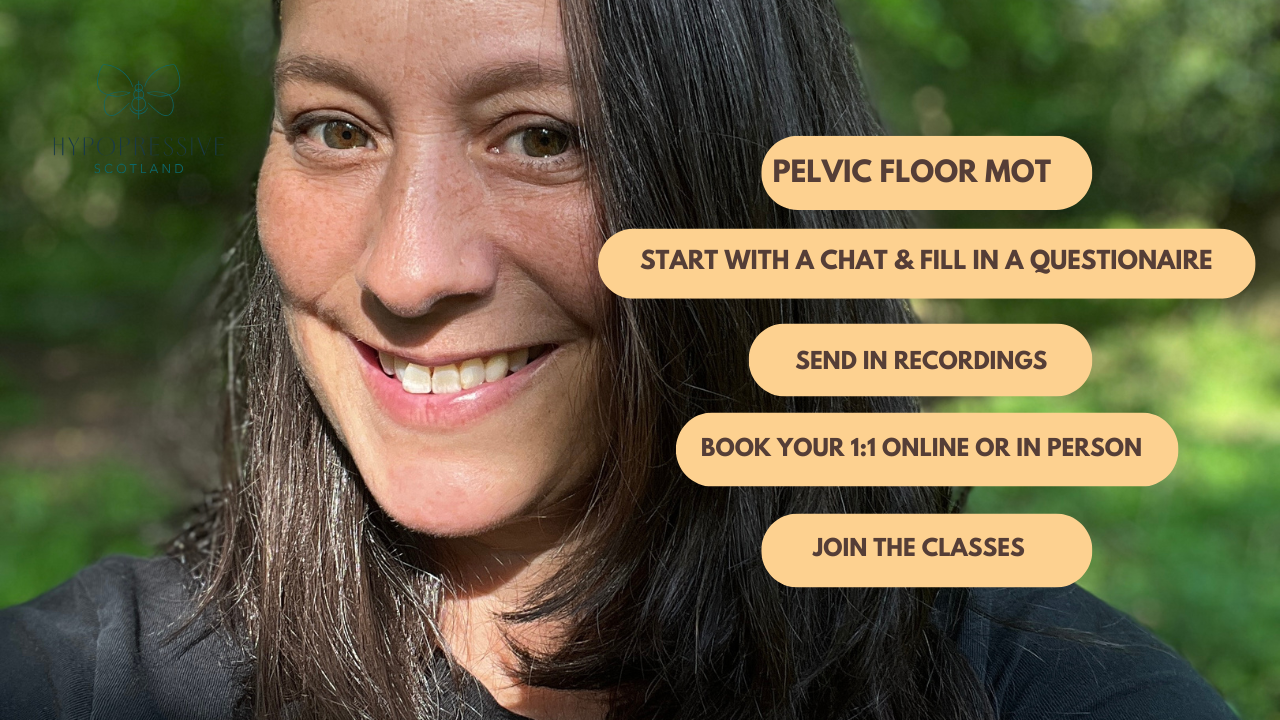
Professional Pelvic Floor MOT
Personalised insight. Professional clarity. A clear way forward.
“I just needed someone to really see me.”
That’s something I hear often from women who come to this work.
They’ve tried exercises, squeezing, researching, and doing all the “right” things — sometimes for years — without ever being shown what’s actually happening in their body.
This is where the Professional Pelvic Floor MOT comes in.
Is this a course or an exercise program?
No.
This is a professional review of how your body is currently working.
I analyse your questionnaire and movement videos, then talk you through what I’m seeing and what matters most for you right now. You’ll receive personalised guidance — not generic instructions.
Do I need to be “good at” movement or know what I’m doing?
No.
You don’t need to perform or get anything right.
I’m looking for patterns, not perfection. The videos simply show me how your body naturally moves and manages pressure - that’s where the useful information is.
What this gives you
This is not a generic program or exercise library.
It’s a professional review of how your body is working - and where things are getting stuck.
It gives you what most pelvic floor advice can’t:
Professional eyes on your movement and breathing
Individual feedback instead of guesswork
Clear priorities, so you know what to focus on - and what to stop doing
What is the Professional Pelvic Floor MOT?
The Professional Pelvic Floor MOT is an individual, online assessment of how your posture, breath, pressure management, and pelvic floor are working together.
You complete a detailed questionnaire and submit a small number of short videos (with clear guidance - no performance required).
I then personally review everything and record a private Loom where I talk you through:
What I’m seeing in your breath, posture, and pressure management
How those patterns may be contributing to your symptoms
What’s currently helping — and what may be holding things back
What to focus on now, based on your goals and daily life
This isn’t about fixing everything at once.
It’s about understanding your body properly, so you can work with it long-term.
Why this approach works
Most pelvic floor work fails not because women aren’t trying —
but because they’re working without individual feedback.
Bodies don’t respond to generic instructions.
They respond to timing, coordination, and context.
This MOT gives you clarity - so your effort finally goes in the right direction.
Who this is for
This is for women who:
Know something isn’t quite right with their pelvic floor
Have tried exercises, courses, or self-guided approaches
Are intelligent, motivated, and willing to work with their body
Want professional insight, not more guessing
Understand this is about maintenance and longevity, not a quick fix
This is not for anyone looking for a one-size-fits-all solution or an instant cure.
What’s included
Your Professional Pelvic Floor MOT includes:
In-depth questionnaire review
Personal movement and breathing analysis
A private Loom with my professional observations
Personalised exercise priorities and guidance
Clear next steps, with a long-term maintenance lens
I’ll look at how your breathing, posture, movement and pressure management are working together, then we’ll have a 1:1 session to go through what I’ve found.
This is a review and strategy, not ongoing coaching.
Investment & availability
£225 only £195 until October 20th .
👉 Request your Professional Pelvic Floor MOT
I open a limited number of reviews each month so every MOT receives full attention.
Once booked, you’ll receive your questionnaire and clear instructions by email