Menopause Is Not the End — So Why Are We Still Acting Like It Is?
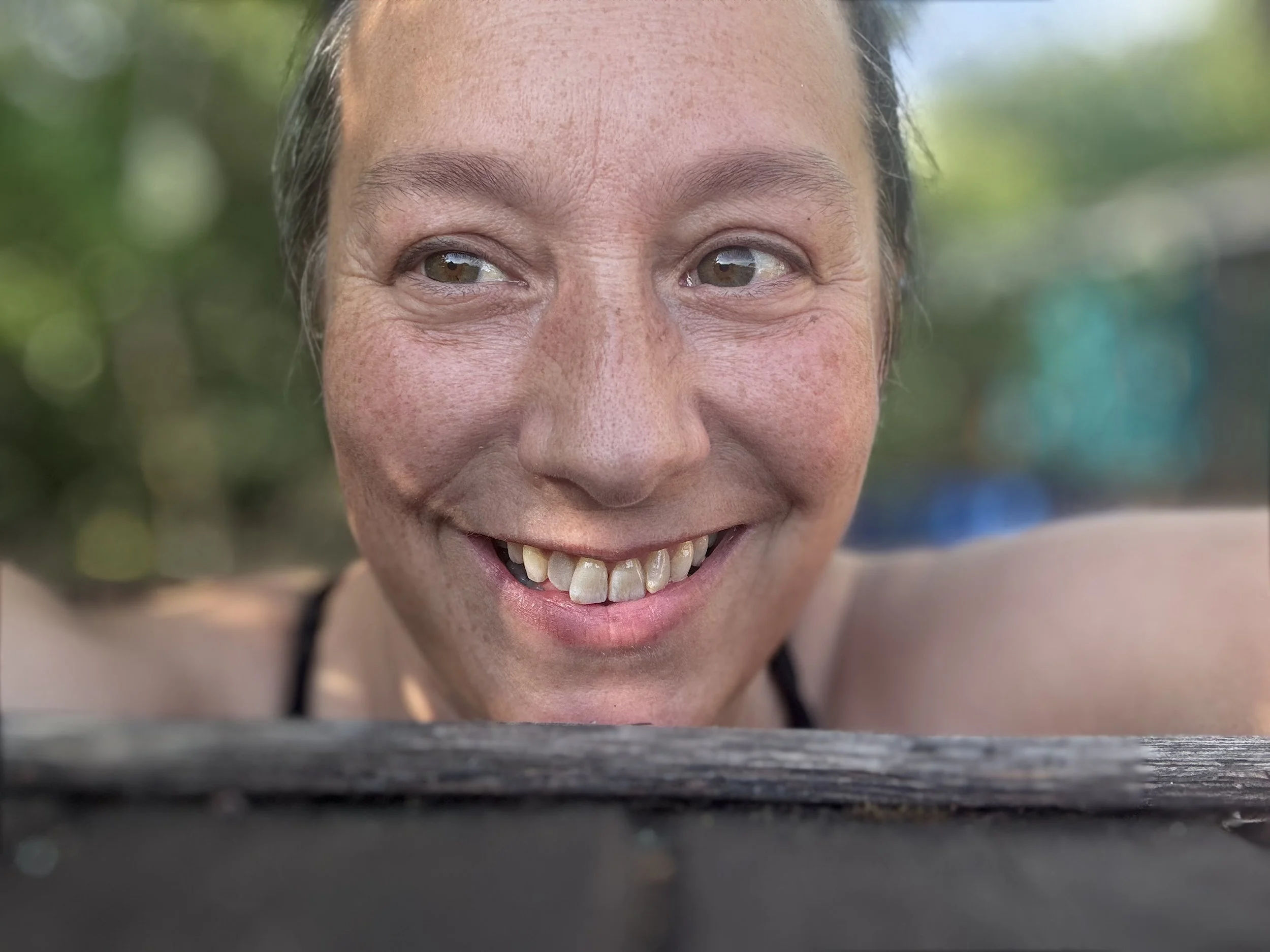
Abby Lord - smiling at this next stage of life - marked by a single moment in time menopause.
Can we just talk about menopause for a minute, but not in the frightening leaflet way, or the awkward “let’s whisper about vaginal dryness and move on quickly” way, that I see so often in social and main stream media?
I mean properly talk about it, like two women sitting in a pub, leaning across the table, finally saying the things we have both been thinking but have not always had the words for.
Because somewhere along the line, women were sold this idea that menopause is the beginning of the end. It is spoken about as though it is the moment we start losing ourselves. We lose our youth, our fertility, our energy, our desirability, our patience, our waistlines, our minds, and eventually, if you listen to some of the nonsense out there, our relevance.
And honestly, I think we need to call time on that. I am really sick of the negativity and the message that gives as a constant stream to our nervous systems and minds.
That does not mean menopause is easy. I am not here to pretend a green smoothie, a bit of journalling and three deep breaths will make everything feel fantastic again. For many women, perimenopause is deeply unsettling. Sleep can change almost overnight. Anxiety can appear from nowhere. Rage can rise up with a force that takes you by surprise. Your joints may ache, your brain may feel foggy, your pelvic floor may suddenly start shouting for attention, and your body may feel as though someone has quietly changed the rules while you were busy looking after everyone else.
Those symptoms are really real. They deserve care, investigation, support and sometimes medical treatment. I am not interested in any way minimising them.
But I am very interested in questioning the story we have wrapped them in and placed a sagging bow around.
Because why were we never really taught that this phase could also be powerful? Why were we not told that if we are lucky, this body might carry us for another thirty, forty, or even fifty years? Why do we still speak about midlife as though the most important thing a woman can do is try to look as though she has not reached it?
I do not know about you, but I am not interested in spending the next half of my life chasing the body I had before I properly knew myself.
I want to live in this body, the one I have.
Not as a punishment. Not as any sort of compromise. Not as some disappointing poorly portrayed sequel to the younger version of me. I want to live in the body that has carried all my history, the stress, both of my children’s births as traumatic and wonderful as they were in equal measures. I want to live in this body that has held grief close, worked in challenging and fun jobs across the world. The body that has experienced love, loss, laughter, responsibility, and a ridiculous amount of “just keep going it will all work out in the end”.
And I do not want that body to become less than just because the world is uncomfortable with women ageing.
We have inherited a very dodgy story about women ageing
The way we talk about menopause did not appear out of nowhere. It comes from a very long history of women’s bodies being misunderstood, medicalised, dismissed and, frankly, feared.
For centuries, when women were distressed, angry, overwhelmed, grieving, traumatised, sexual, not sexual enough, exhausted, outspoken, or simply inconvenient, there was usually a label waiting for them. The language changed over time, but the pattern did not. Women were called hysterical, mentally unstable, hormonal, difficult, emotional, dramatic or past it. And were also tried as witches sometimes for their irrational behaviour and sometimes by husbands who wanted a newer model and sometimes for sharing ancient wisdom about herbs to help others.
And menopause was pulled into that same story.
Instead of being treated as a natural transition into a different powerful phase of life, menopause became framed as decline. A woman without periods was often seen as deficient. A woman no longer fertile was quietly pushed towards invisibility. A woman ageing was expected to accept that her body, her power and her value were all fading at roughly the same time.
We may like to think we have moved far beyond that, but I am sadly not convinced we have moved as far as we think.
Women are still dismissed in appointments. They are still told it is probably stress or worse they are over-reacting.
Personally when my endocrine system was tanking, after 2 years of asking for blood tests and being dismissed, I reached a peak of don’t f**cking ignore me, when the doctor suggested that all the symptoms might be because of covid. At that point I saw red and I advocated for myself, I stopped apologising and started insisting, with no apologies that I be listened to and that I get the care I knew I needed. But it took that an anger for the doctor to finally listen and 50 years ago they may have popped me in a sanatorium for being so hysterical. And that was before menopause, but the rage was probably perimenopause rage - and it was needed.
Women are still embarrassed to talk about leaking, prolapse, painful sex, vaginal dryness, flooding, clots, rage, exhaustion or the strange feeling that they have become unfamiliar to themselves. Menopause is still treated as a punchline in too many workplaces, families and conversations.
The old shame has not disappeared. It has just had a rebrand.
And then we wonder why women arrive at perimenopause feeling frightened.
Of course they do.
If the only story you have heard is that menopause means falling apart, then every symptom becomes evidence that the story is true. A bad night’s sleep is not just a bad night’s sleep. It becomes the beginning of decline. A leak is not just a symptom that needs support. It becomes proof that the body is failing. A hot flush is not just a nervous-system and hormonal event. It becomes embarrassment, exposure, loss of control and shame.
This is why mindset matters, but not in the silly, toxic positivity way.
I am not saying you can think your way out of menopause. I am not saying symptoms are imagined. I am saying that the meaning we attach to our symptoms changes how safe we feel inside the experience.
There is a huge difference between saying, “My body is falling apart,” and saying, “My body is changing, and I need a different kind of support now.”
There is a huge difference between saying, “I am past it,” and saying, “I am entering a phase where I need to train, rest, nourish and listen differently.”
The symptoms may still need care, but the woman inside the experience feels different. She has more agency. She has more hope. She is not fighting herself quite so hard.
And research backs this up. Studies have found that women with more positive attitudes towards menopause often report fewer or less distressing symptoms, while fear, stress and negative beliefs can make the whole experience feel heavier. That does not make menopause “all in your head”. It means hormones happen inside a whole human being, not inside a textbook diagram.
They happen inside a woman with a nervous system, a history, a culture, relationships, responsibilities, sleep patterns, beliefs and expectations.
So no, we cannot talk about menopause only through oestrogen.
We have to talk about the woman living through it.
What if this phase is not only loss?
I know not every woman feels delighted when her periods stop. Some women grieve that change. Some feel shocked by it. Some feel as though their body has moved into a new chapter before they were ready. Some have spent years trying to conceive, or managing reproductive trauma, or carrying a complicated relationship with their cycle, and the end of menstruation can stir up a lot.
That deserves real tenderness.
But I also think we need to make space for the women who feel relief.
There is that brilliant moment in Fleabag where Kristin Scott Thomas’ character Belinda says, “Women are born with pain built in.” She talks about periods, pain, menopause, heat, pelvic floor chaos and then lands on the part we rarely hear: “Then you’re free.” And that is the bit I keep coming back to. What if menopause is not only loss? What if, for some women, it is also release?
For some women, menopause brings freedom from decades of bleeding, cramping, flooding, leaking through clothes, PMS, migraines, pregnancy anxiety, contraception decisions, cycle tracking, exhaustion, pain, endometriosis, adenomyosis, fibroids, PMDD or the monthly feeling that your body has taken the steering wheel again.
That is not a small thing.
Imagine living for thirty or forty years with a body that changes rhythm every month, and then gradually discovering that the old rhythm is loosening its grip. Yes, the transition may be messy. Yes, symptoms may arrive. But there may also be a strange and powerful spaciousness inside it.
A woman might start asking questions she has not had the energy, time or permission to ask before.
What do I actually want now? What do I want my body to be able to do? What am I tired of tolerating? What have I been carrying that was never really mine? What would it feel like to stop treating my body as a problem I have to constantly manage?
That is where menopause becomes more than a hormonal milestone.
It becomes a threshold to a different world.
Not because everything magically becomes easier, but because the body begins to demand a different relationship. The old strategies may stop working. Pushing through may stop working. Under-eating, over-exercising, gripping, bracing, people-pleasing and pretending you are fine may stop working.
And while that can be deeply uncomfortable, it can also be really honest.
What if your body is not falling apart at all, what if it is trying to speak to you?
Maybe it is refusing to keep living by rules that never truly supported it in the first place…
I am not interested in anti-ageing
Can I be brutally honest? I really do not like the phrase or the sentiment behind anti-ageing.
Kate Winslet says it beautifully when she challenges the idea that women reach their forties and start creeping towards the end. She talks about menopause, sex, sagging skin and all the things women are conditioned to fear, then says, “First of all, so what? And secondly, it’s just conditioning.” That is exactly the conversation we need. Not pretending the body does not change, but questioning why change has been sold to us as failure.
What exactly are we anti? Being alive for longer? Having a face that shows we have laughed, cried, worried, loved, worked, survived and actually existed? Having a body that changes because bodies are living tissue, not ornaments gathering dust on a mantlepiece?
The anti-ageing industry has done a very clever job of making women feel as though every visible sign of life is a fault that needs correcting. It tells us to smooth, lift, tighten, shrink, hide, burn, freeze and fight. It dresses fear up as self-care and then sells it back to us in expensive packaging. And that makes me so angry.
But maybe the real problem is not that women “let themselves go”. Maybe they don’t need all this noise from big industry.
Maybe the problem is that women have been expected to hold everything together for far too long.
At some point, often around midlife, the body begins to object. It does not always whisper either. Sometimes it shouts through sleep, joints, mood, pelvic floor symptoms, fatigue, anxiety, rage, weight changes or a sudden inability to tolerate nonsense.
That is not in any way failure.
It is always valuable information.
And that is the conversation I want more women to have. Not, “How do I stay young?” but “How do I stay capable?” How do I build a body that can lift the shopping, carry the grandchild, climb the hill, walk without leaking, get off the floor, garden, travel, dance, have sex without fear, run if I want to, jump if I want to, and still feel like mine?
That is not anti-ageing.
That is pro-living and that is a much more positive conversation to be having with each other and our own body’s.
Why are we only just talking about this properly now?
This is the bit that still amazes me.
How on earth have women been moving through perimenopause and menopause for generations, and yet so many of us still arrive there feeling as though nobody gave us the manual?
We are taught about periods, sort of. We are taught about pregnancy, usually through the lens of not getting pregnant. We are taught about contraception, fertility, birth, breastfeeding, smear tests and sometimes pelvic floor squeezes if we are lucky.
But menopause?
For a long time, it has been treated as a vague thing that happens “later”. Something your mum might have whispered about. Something that made women hot, irritable and a bit forgetful. Something to joke about, endure quietly or medicalise only when symptoms became impossible to ignore.
And that is absolutely mental when you think about it.
Because this is not a tiny footnote in a woman’s life. If a woman reaches menopause in her late forties or early fifties, she may live another thirty, forty or even fifty years beyond it. That means post-menopause is not the end of the story. It could be half the book.
So why has the conversation arrived so late?
Why have so many women been left to Google symptoms at 2am, wondering if they are anxious, depressed, losing their mind, developing dementia, becoming lazy, becoming weak, becoming difficult, or simply failing at life?
The rage I experienced at peri-menopause was out of the blue and epic. I thought I was going mad. The traffic warden at a popular East Lothian beach certainly thought I was insane. I knew nothing about it. I googled it once my husband had gone to bed and was so relieved it was an actual '“thing”.
Why have women had to fight so hard to be believed when they say, “I do not feel like myself”?
This is where the historical nonsense still leaks into the present.
Yes, we have better language now. Yes, we have more research, better menopause education, more public conversations, more workplace policies, more doctors listening, more women speaking openly. That is fantastic and long overdue.
But it is still not enough.
Women are still being dismissed. They are still being told it is probably just stress. They are still being offered antidepressants without a proper conversation about hormones, sleep, pelvic health, vaginal symptoms, pain, strength, workload, nutrition, or the fact that their whole body may be changing. They are still embarrassed to mention leaking, painful sex, prolapse, urgency, rage, flooding, clots or vaginal dryness because somewhere deep down the shame is still sitting there with its coat on.
And this does not just happen in healthcare.
It happens at work too.
Research from the Fawcett Society found that 41% of women had seen menopause or menopause symptoms treated as a joke at work, and among women who had taken time off because of menopause, 39% had put anxiety or depression on their sick note rather than say menopause. That tells us something important. It tells us women are still managing not only symptoms, but stigma.
Imagine if we treated any other major life transition like that.
Imagine if we expected people to quietly navigate years of sleep disruption, mood changes, body changes, pelvic symptoms, brain fog and temperature chaos while pretending nothing was happening because everyone around them felt awkward.
It is absolutely ridiculous.
And yet women have been doing it for years.
This is why I think the conversation matters so much. Not because talking fixes everything, but because silence makes women feel alone inside something millions of us will experience, tens of thousands are experiencing right now.
And once a woman understands what is happening, once she has language, options, support and a better story, something changes.
She stops thinking, “I am going mad.”
She starts thinking, “Ah. My body is changing. I need support. I need different tools. I need to stop pretending I can run the old software on the new system.”
The role models are changing
One of the reasons I feel hopeful about this next generation of midlife women is that the role models are changing.
We are beginning to see more women in their forties, fifties, sixties, seventies and beyond who are not disappearing, shrinking or apologising for ageing. They are lifting weights, speaking up, starting businesses, changing careers, travelling, learning, leading, training, writing, teaching, loving, creating, dancing and refusing to become invisible just because their periods have stopped.
Joanna Lumley has always had that fabulous refusal to shrink. Her line, “Growing old is good,” feels almost radical in a culture that keeps trying to sell women the idea that ageing is something to fight. She reminds us that with age comes clarity. You work out what matters. You stop wasting energy on nonsense. And that, surely, is part of the gift.
And that matters, because women need to see what is possible.
For too long, the cultural image of the menopausal woman has been tired, sweaty, irritable, undesirable and slightly ridiculous. She is either the punchline, the problem, the patient, or the woman in the skincare advert trying desperately to look ten years younger.
But that image is starting to crack.
People like Dr Stacy Sims have helped change the conversation around women’s physiology, especially for active women in midlife. Her work encourages women to understand their changing hormones, train with purpose, build strength and longevity, fuel properly and stop treating the female body as a smaller, more inconvenient version of the male body. Her message is very much that the body does not have to be a mystery, and that women can use training, nutrition, stress and recovery intelligently through midlife and beyond.
I think that is super important.
Not because every woman needs to copy one exact training method, because she absolutely does not. We have to be careful not to replace one rigid old story with a shiny new one. Not every woman is ready to lift heavy straight away. Not every woman needs high intensity training tomorrow. Not every woman is sleeping, eating, recovering or regulating well enough to add more stress to the system.
But the bigger message is powerful.
Midlife is not the time to become smaller.
It is not the time to apologise for needing muscle, needing guidance, needing more.
It is not the time to live on coffee, cortisol and a handful of almonds while wondering why the body feels like it has staged a rebellion.
It is the time to ask better questions.
How do I build strength now? How do I protect my bones? How do I support my pelvic floor? How do I recover properly? How do I fuel myself rather than underfeed myself? How do I train in a way that respects my nervous system, my sleep, my symptoms and my actual life?
And beyond the exercise world, we are also seeing more women simply refusing the old disappearing act. Women are speaking openly about menopause, confidence, libido, boundaries, work, rest, reinvention and what it means to age without treating youth as the prize.
That visibility matters.
Because when a woman sees another woman ageing with strength, humour, honesty and ownership, something in her nervous system softens.
She gets to think, “Maybe I do not have to vanish.”
Maybe I can become stronger.
Maybe I can start again.
Maybe I can change direction.
Maybe I can lift weights.
Maybe I can ask for help.
Maybe I can talk about leaking.
Maybe I can enjoy sex again.
Maybe I can stop hating my changing body.
Maybe I can age without constantly trying to erase the evidence that I have lived.
That is not vanity.
That is liberation.
The role models matter because they show us that ageing is not one narrow road into decline. It can be athletic, creative, sensual, wise, funny, powerful, quiet, loud, rebellious, gentle, ambitious or deeply peaceful.
There is no single way to do it.
You finally get do properly do you.
Because the point is not to become someone else’s version of a successful midlife woman.
The point is to stop believing that your life gets smaller from here.
This is why strength matters so much
This is where strength training comes in, and not in a “beast mode or go home” way.
I do not think women in midlife need to be bullied into exercise. Most women I work with have already spent decades being too hard on themselves. They have pushed through tiredness, ignored symptoms, juggled work and family and care and stress, and then blamed themselves when their body finally asked for something different.
So when I talk about strength training, I am not talking about punishment. I am not talking about shrinking. I am not talking about earning your dinner or getting your younger body back.
I am talking about building a body that can support your life.
Muscle is not just about appearance. Muscle helps us manage blood sugar. It supports our bones and joints. It helps us stay steady, powerful, balanced and independent. It helps us get up from the floor, climb stairs, carry things, protect our future selves and feel less fragile in the world.
And yes, it matters for the pelvic floor too.
Not because the pelvic floor is naughty and weak and needs to be squeezed into submission, but because the pelvic floor works better when the rest of the body is sharing the load.
If your hips are not contributing, your breath is held, your ribs are rigid, your feet are gripping and your nervous system is braced for impact, the pelvic floor can easily become the poor little overworked employee at the bottom of the company, trying to deal with everybody else’s workload.
That is not fair on her.
This is one of the reasons I love the newer conversations happening around women’s training in midlife. People like Dr Stacy Sims have helped shift the narrative away from “do less, eat less, shrink more” and towards something far more useful: understand female physiology, lift, fuel, recover, and train for the body you are in now.
That message is important because so many women have been taught to become smaller with age.
But I would also add a bit of caution, because I think we need nuance here.
Not every woman needs the same approach. Some women are ready to lift heavy and feel fantastic doing it. Some women need to restore breath mechanics first. Some need pelvic floor down-training. Some need to stop gripping their jaw and glutes before they add more load. Some need support with prolapse, leaking or pain. Some need to sleep. Some need to eat more. Some need to stop treating every symptom as a personal failure, they need mindset work first.
Strength is not one thing.
Strength is the ability to meet life with capacity.
Sometimes that capacity comes from lifting a heavier weight. Sometimes it comes from finally learning how to breathe without bracing. Sometimes it comes from being able to rest without feeling guilty. Sometimes it comes from saying no.
The point is that midlife women do not need to fade quietly into the background.
They need better tools.
Your pelvic floor is not separate from the rest of you
This is the part I wish every woman was told before she ever gets handed a leaflet full of squeezes or an app.
Your pelvic floor does not live in isolation.
It is not sitting down there waiting to be tightened like a drawstring bag. It responds to your breath, your ribs, your diaphragm, your jaw, your feet, your hips, your spine, your scar tissue, your stress levels and your nervous system.
So when women reach perimenopause or menopause and suddenly notice more leaking, heaviness, urgency, pelvic tension or loss of confidence, it is not always as simple as saying, “Oh, your pelvic floor is weak.”
Sometimes the pelvic floor is tight. Sometimes it is tired. Sometimes it is late to respond. Sometimes it is guarding. Sometimes it is doing far too much because other parts of the body have stopped sharing the work. Sometimes the whole pressure system needs support.
This is why I love Hypopressives in this phase.
Not as a magic wand, and not as a replacement for medical care or pelvic health physiotherapy when those are needed, but as a way of helping the body reorganise.
Hypopressives work with breath, posture, rib expansion, pressure, the diaphragm, abdominal wall and pelvic floor as a whole system. They are not about squeezing harder. They are about creating space, responsiveness and better coordination.
For a woman who has spent years bracing, gripping, clenching, holding her breath and carrying everyone else’s needs in her body, that can feel completely different from being told to simply tighten more.
And I think that matters at menopause because so many women arrive at this stage already tired of being told to try harder.
They do not need more pressure.
They need much more informed support.
They need to feel how their ribs move, how their breath lands, how their spine responds, how their feet meet the floor, how their pelvic floor can be part of a reflexive system rather than a muscle they are constantly trying to police.
When the body starts to feel connected again, confidence often follows.
Not overnight (I wish it did). Not dramatically. But quietly, steadily, in the way a woman starts to trust herself again.
And sometimes, the body needs to shake
Then there is TRE®️.
And to be fair, by the time a woman reaches midlife, I often think the body has a lot to say.
Decades of holding it together do not just disappear. The body finds ways to cope. The brain teaches It to brace. to grip. To tighten the jaw. It locks the ribs. It holds the belly. It clenches the pelvic floor. It keeps going because that is what it has learned to do. That has been the learnt programme.
Then menopause arrives, and the old coping strategies may not work in the same way.
The body becomes louder. Sleep changes. Patience thins. Rage appears. Anxiety spikes. The tolerance for nonsense drops through the floor. And while that can feel unsettling, I do sometimes wonder whether part of it is the body finally refusing to keep everything buried. Cleaning the slate for the next stage of life.
Not all of it, of course. Hormones are real. Nervous system changes are real. Life stress is real.
But there is often a truth that emerges in midlife.
A woman begins to realise what she no longer wants to carry.
TRE®️, or Tension and Trauma Releasing Exercises, gives the body a safe way to discharge some of that held tension through natural tremoring and shaking. It is not about forcing a big emotional release or performing trauma on a mat. It is about giving the body permission to complete some of the stress patterns it has been holding. It also helps the body and brain to connect in a healthier way.
For pelvic floor health, this matters.
A body that feels unsafe often grips. A body that has been under pressure often braces. A nervous system that is constantly on alert does not create the best environment for breath, digestion, pleasure, pelvic floor responsiveness or deep rest.
So when we talk about menopause, I do not think we can only talk about hormones and weights.
We also need to talk about safety.
We need to talk about the woman who has been holding everyone else up for years and now wonders why her own body feels tense, tired or unfamiliar.
We need to talk about release as well as strength.
Because thriving is not just about being able to lift more.
It is also about no longer carrying what was never yours to carry.
Thriving is not pretending everything is fine
Now, let me be really clear, because this is important.
Reframing menopause does not mean denying symptoms.
It does not mean you should not take HRT. It does not mean you should avoid medication, blood tests, pelvic health physiotherapy, mental health support or proper medical care. It does not mean you can breathe your way through everything while the world continues to ask too much of you.
That would be ridiculous.
Some women need HRT and it changes everything. Some need vaginal oestrogen. Some need thyroid support. Some need pelvic floor treatment. Some need investigations. Some need counselling. Some need strength training. Some need rest more than another workout.
This is not about being “natural” at all costs.
It is about not reducing women to another set of symptoms.
It is about not making menopause only a medical problem, only a mindset problem, only a fitness problem, or only a lifestyle problem.
It is about seeing the whole woman.
Her body. Her history. Her stress. Her strength. Her symptoms. Her hopes. Her pelvic floor. Her nervous system. Her desire to feel like herself again.
Or maybe not even like herself again.
Maybe like someone even better, not looking back, looking forward with way more clarity and focus. Someone who refuses to be overlooked or ignored.
We do not become less
I think this is the part I want women to hear the most.
You do not suddenly become less because your hormones change.
You are not less desirable. You are not less capable. You are not less powerful. You are not less worthy of support, pleasure, strength, care, rest or joy.
You are not here to spend the next half of your life apologising for ageing.
You are not here to chase your younger body as though it was the best version of you. Maybe she was brilliant. Maybe she was beautiful. Maybe she was strong in ways you miss. But she was not the final version.
This phase asks something different of us.
It asks us to listen. It asks us to train differently, rest differently, fuel differently and stop gripping so hard. It asks us to build muscle, breathe properly, shake off old tension, support the pelvic floor as part of the whole system and stop treating ageing as something to fear.
Because menopause is not a full stop.
It is a door way, a theshold.
And yes, thresholds can be uncomfortable. They ask something of us. They make us decide what we are taking with us and what we are finally putting down.
So no, I do not want to be 25 again.
I want to be here.
In this body.
Wiser, stronger, more honest and less willing to abandon myself.
Not an echo of who I was before.
Not less.
Still becoming.
To work with me start with a Pelvic floor MOT or my short on demand course
Research for further reading and from where I generated the facts behind this blog.
A recent review found that positive attitudes toward menopause are linked with fewer menopausal symptoms, while negative attitudes are associated with more intense symptoms and lower quality of life. That supports the blog’s point that mindset does not “invent” symptoms, but it can shape how women experience and cope with them. (PMC)
Lotte Hvas’ qualitative study is especially useful for the “menopause can be freeing” section. In her study, 194 women described positive aspects of menopause, often around relief from menstruation, PMS and fear of pregnancy. (PubMed)
A 2022 qualitative study found that women’s experience of the menopause transition included fear of the future and a need for reassurance, which fits the argument that cultural stories and support matter. (PMC)
For historical context, recent work on the medicalisation of menopause explores how menopause has been framed medically and culturally, while feminist analyses have long argued that menopause discourse is shaped by gender bias, class and social assumptions. (PMC)
For the strength-training section, a 2023 review found that resistance training may help postmenopausal symptoms and functional capacity, although the evidence certainty was low to very low. Another review found resistance training is effective for increasing muscle mass in postmenopausal and older women. (PubMed)
A 2025 review found that regular controlled exercise can improve vitality, mental health and general quality of life in women during the climacteric period, though evidence for vasomotor symptoms is more mixed. (PMC)