The Silent Signs of Pelvic Floor Dysfunction Most Women Ignore
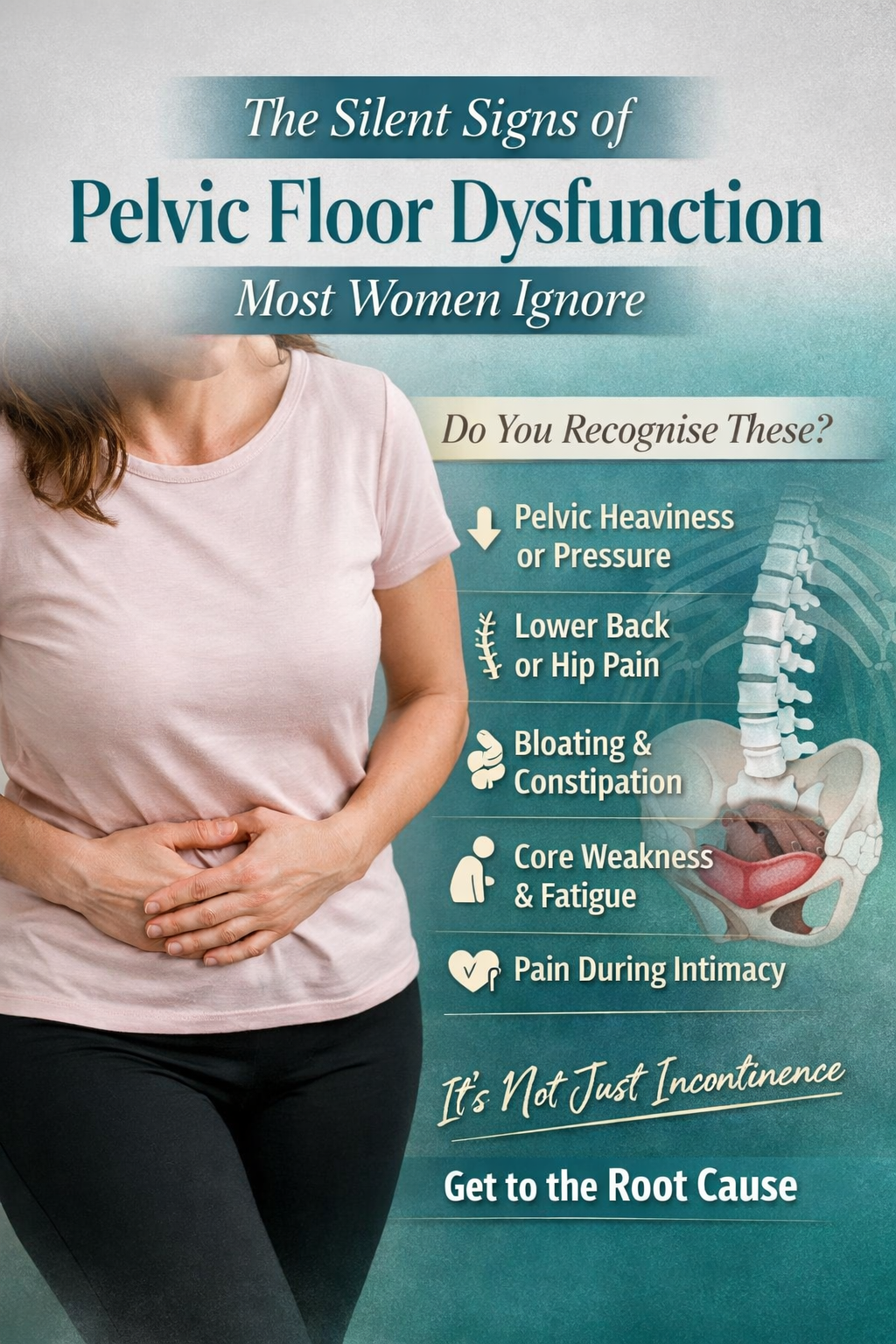
Silent signs of pelvic floor dysfunction
If you search for the signs of pelvic floor dysfunction, most articles will talk about leaking when you cough, sneeze, or run.
But pelvic floor problems very rarely begin there.
For many women, the early signs are quieter. They appear gradually in ways that are easy to dismiss. A strange heaviness at the end of the day. A feeling of pressure when standing for long periods. Lower back ache that appears for no obvious reason.
These symptoms are often labelled as common, particularly for women over 35 or after pregnancy.
But common does not mean normal.
The pelvic floor is not simply a muscle you squeeze. It is part of a pressure management system involving the diaphragm, abdominal wall, spine, and hips. When this system becomes unbalanced, the body often sends subtle signals long before more obvious symptoms appear.
Recognising those early signs of pelvic floor dysfunction can help women address the underlying mechanics before the problem progresses.
More Than Incontinence: The Hidden Symptoms
When most people think about pelvic floor issues, they think about bladder leakage. But dysfunction in this area can show up in many other ways.
Some of the most common early symptoms include:
Pelvic heaviness or pressure that worsens as the day goes on
A sensation that something is “dropping” internally
Discomfort when standing for long periods
Core fatigue during exercise
A feeling that your abdomen cannot stabilise properly
These symptoms can occur even when medical scans or examinations show nothing dramatic.
From a biomechanical perspective, however, the pattern is often clear. When internal pressure is not being distributed efficiently through the rib cage, abdomen, and pelvis, the pelvic floor can begin to absorb more load than it is designed to manage.
Over time, this may contribute to pelvic floor issues, including prolapse symptoms or bladder urgency.
The Lower Back and Hip Connection
The pelvic floor does not work in isolation, I know it isn’t what we are taught. It actually forms the base of what is sometimes called the “core canister,” working alongside the diaphragm above and the abdominal wall around the sides.
When this system loses coordination, the body often finds support elsewhere.
This is one reason many women experiencing signs of pelvic floor dysfunction also report:
Persistent lower back ache
Tight hips or glutes
Sacroiliac discomfort
A feeling of instability when walking or exercising
The body is remarkably adaptive. If the pelvic system cannot stabilise pressure effectively, surrounding muscles often ‘help’ by gripping harder to compensate.
That gripping can create the sensation of stiffness, tight hips, or chronic tension around the lower back.
Digestive Health and the Pelvic Floor
One of the most overlooked signs of pelvic floor dysfunction is digestive discomfort.
Many women experience:
Persistent bloating
Sluggish bowel movements
Difficulty fully emptying the bowels
Pressure when going to the toilet
While digestive symptoms are often attributed solely to diet, the mechanics of the abdominal and pelvic system also play a role.
Healthy elimination relies on coordinated pressure changes within the abdomen and pelvic bowl. If the pelvic floor cannot relax properly or if internal pressure is poorly distributed, bowel function can become less efficient.
This is one reason pelvic health specialists, including pelvic floor physiotherapists, often assess breathing mechanics, posture, and movement patterns alongside digestive symptoms.
The Trap of the Hypertonic Pelvic Floor
One of the biggest misunderstandings around pelvic floor issues is the belief that every problem is caused by weakness. In reality, many women develop an overactive or hypertonic pelvic floor.
This means the muscles are holding too much tension and struggle to relax.
Symptoms may include:
Pain during intimacy
Difficulty emptying the bladder fully
Frequent or urgent urination
A feeling of constant pelvic tension
Discomfort during exercise
When the pelvic floor is already overactive, traditional strengthening exercises such as repeated Kegels may actually worsen symptoms.
In these cases, learning how to restore coordination, breathing mechanics, and pressure balance often becomes more important than simply squeezing the muscles harder.
Why Modern Life Aggravates Pelvic Pressure
Many of the women searching for pelvic floor therapyor pelvic floor physiotherapy are not sedentary, in fact, many are extremely active. plevic floor dysfunction can happen whether you are active or not.
High-impact exercise, long working hours at a desk, and shallow breathing patterns can all contribute to cumulative pressure within the abdomen and pelvis.
Common contributing factors include:
Running or high-impact training without pressure awareness
Bootcamp-style workouts that emphasise bracing
Long periods of sitting
Rib cage rigidity or restricted breathing patterns
Chronic stress and breath holding
Over time, these patterns can create repeated downward pressure through the pelvic floor.
This is why pelvic health is not simply about strengthening a single muscle group. It involves restoring coordination throughout the entire system.
The Hypopressive Approach: A Low-Pressure Solution
One approach gaining attention in pelvic health is the Abdominal Hypopressive Technique, often referred to simply as hypopressives.
Rather than increasing pressure through the abdomen, hypopressive exercises aim to reduce internal pressure while encouraging reflex activation of the deep postural muscles.
This method focuses on:
Improving rib cage mobility and breathing mechanics
Reducing excessive downward pressure in the pelvis
Encouraging reflex engagement of the pelvic floor
Supporting posture and spinal alignment
Because of this pressure-reducing approach, hypopressive exercises are often explored by women experiencing prolapse symptoms or chronic pelvic tension.
Many women also report improvements in posture, core awareness, and waist definition as the system becomes more coordinated.
Why Choose Hypopressive Scotland for Pelvic Health
Women seeking pelvic floor therapy are increasingly looking for approaches that go beyond generic exercise advice. And if you are in Edinburgh, the Lothians or further afield you could make an appointment to see me in person, either here in my studio or via zoom.
At Hypopressive Scotland, the focus is on restoring whole-body coordination rather than simply prescribing strengthening exercises.
Support may include:
• Individual coaching to assess breathing and pressure patterns
• Guidance tailored to postnatal recovery and perimenopause
• Workshops teaching hypopressive techniques safely
• Education on posture, movement, and pelvic health
For women searching for a pelvic floor specialist near me, working with a practitioner who understands the relationship between breath, pressure, and pelvic support can make a significant difference.
Listening to the Early Signals
The quiet signs of pelvic floor dysfunction are often the body’s first request for support.
A little heaviness. Unexplained back ache. Digestive discomfort. A sense that something does not feel quite right.
These signals are not something women simply have to tolerate.
When addressed early with the right guidance, many women find they can restore comfort, confidence, and better coordination throughout the entire system.
If you recognise these symptoms, exploring support from a pelvic floor specialist, like me or pelvic floor physiotherapist may be a helpful first step.
You can also begin learning the foundations of hypopressive breathing and pressure management through introductory workshops or one-to-one coaching with Hypopressive Scotland.
Small changes in how the body manages pressure can create meaningful improvements in pelvic health over time.
FAQ
Can pelvic floor issues cause bloating?
Yes. Poor pressure management and pelvic floor coordination can influence digestion and bowel function, sometimes contributing to bloating or difficulty with elimination.
Why does my back ache more as the day goes on?
Fatigue in the core and pelvic system can lead to compensatory tension in the lower back and hips, especially when standing or sitting for long periods.
Are hypopressives better than traditional pelvic floor exercises?
They are an amazing addition to PFMT and also work beautifully on their own at first layering in PFMT after function is starting to return.
Can I do hypopressives if I have not had children?
Yes. Pelvic floor dysfunction is not limited to postnatal women and can occur in women at many life stages for all sorts of different reasons.
How quickly will I notice changes?
Many women report improved body awareness and symptom relief within a few weeks, although timelines vary depending on consistency and individual factors.