Women Are Not Small Men: So Where Do We Begin?
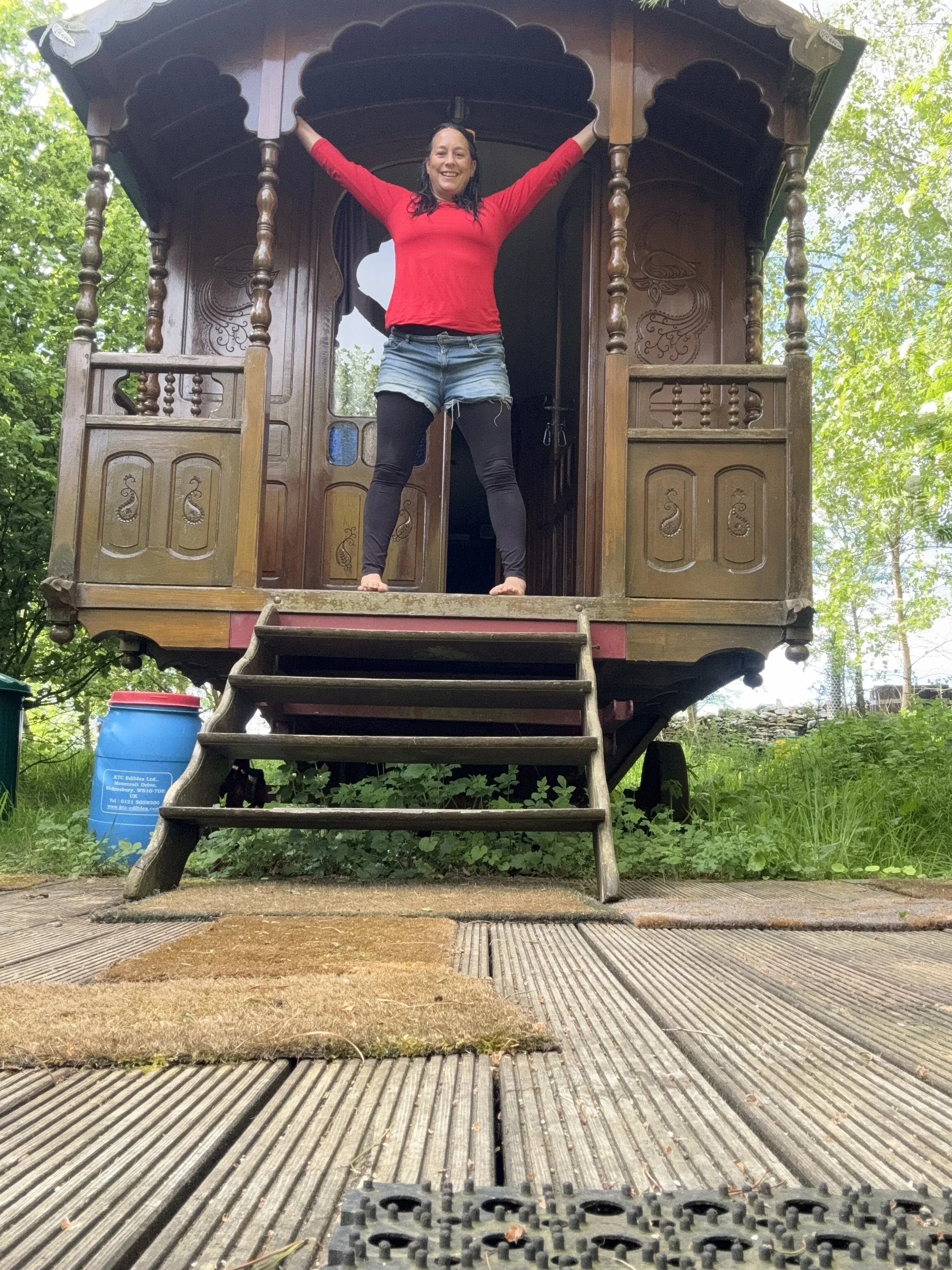
Abby ready when you are to start learning about what your body needs
Women are not small men, but that does not mean all women need the same plan.
Where would we begin, you and I, if we were to meet either virtually or in person?
First, we would say hi. Then we would talk. Not just about “pelvic floor exercises”. Not just about symptoms. Not just about whether you leak, feel heaviness, have pain, feel disconnected, or have been told to squeeze more.
We would talk about all the things I think are really important when we are looking at pelvic health. When did you first notice something was up? What did you notice first? How did it make you feel? What do you feel you did to compensate? What have you stopped doing that you used to do?
We would talk about your history too, because your body has not arrived here from nowhere. Have there been accidents, falls, injuries, births, surgeries, shocks, stressful times, or long periods where you had to just keep going? Did you have any accidents when you were a child or in your younger years? Did you do extreme sports? Is there a sport your body always seems to defer towards, like cycling, running, dance, gymnastics, horse riding, or lifting?
Mine certainly did.
I remember sitting in a car near the bridge in South Queensferry with a boyfriend I was crazy about. He was about to go away to do Camp America and we were eating ice creams. He said, “You had better not eat too many ice creams when I am away, you might get fat.”
I do not think he meant to harm me. And what happened afterwards was not simply “his fault”. Life is rarely that neat.
But those words landed somewhere deep.
When he came back, he split up with me, and I spiralled. That spiral eventually became anorexia, and it changed the way I related to my body, food, exercise, control and safety for a long time.
I cannot draw a straight line from one comment to every symptom I experienced later. Bodies are more complex than that. But I do know this: the way we learn to hold, control, punish, protect, shrink or push our bodies can become part of the story.
And for me, that story mattered when I later experienced prolapse and had to rebuild trust in my body again.
So yes, I ask about your history. Not because we are looking for someone to blame, but because your body has lived a life. It has adapted around words, experiences, injuries, stress, shame, pressure, birth, grief, sport, survival and all the times you had to keep going.
Then I would ask what symptoms your pelvic floor is shouting at you with. Leaking, heaviness, dragging, pain, tension, constipation, urgency, a feeling of disconnection, a fear of movement, or a loss of trust.
These symptoms are not failures. They are information. They are your body trying to get your attention.
So before we jump into fixing, strengthening, squeezing, stretching or “activating”, we would start by noticing.
We would take one minute standing, with your eyes closed if you choose, and simply notice. Where do you feel your body holding on? Where has it let go? Where feels tight, tired, disconnected, surprisingly good, strong, overworked, or as if it has checked out completely? Then we would take another minute to write that down, because the first step is not always doing more. Sometimes the first step is finally listening.
Then we would look at your body as a whole. We would look at your feet and how your toes move. We would notice how you plant yourself on the ground. Do you feel supported by the floor, or are you gripping on to it for dear life?
We would look at your knees. Do they lock, collapse in, soften, or know how to bend without the rest of you panicking? We would look at the way your pelvis moves. Can it tilt, rotate and respond, or is it stuck in one position trying to keep you safe?
We would look at your rib cage. Does it move when you breathe? Does it expand to the sides? Can you feel the back of your ribs? I know, “the back of my ribs, is that even a thing?” may be going through your head right now. Yes, it is a thing. A very important thing.
We would look at your neck and shoulders. Are they helping, or are they doing every single job in the building? And we would have loads of fun exploring all of these areas, playing with movement possibilities as we go. Because this is not about judging your body. It is about getting curious.
Then we would turn to breath. For this one, we are going to have a little go together. I would love you to take part in this next section, either sitting or standing.
Just as you are, take a few breaths in and out and notice how it makes you feel. Do you feel anxious, tight, worried you are not getting it right? Does it feel easy or light? Do you enjoy noticing your breath, or not? There is no wrong answer here.
Now bring your awareness to where the breath lives in your body. What moves the most as you inhale? Is it your upper ribs, the back of your ribs, your tummy to the front, your whole rib cage, your whole torso, or does it feel like nothing much moves at all? Again, there is no wrong here. There are simply different ways your body has learned to adapt.
But there is a really useful way of breathing when we are thinking about pressure, pelvic health, posture and the nervous system. Shall we try?
If you are sitting, sit on your sit bones and see if you can balance your rib cage over your pelvis. Take a moment to notice your ears over your shoulders, your chin horizontal to the floor, your eyes relaxed, your jaw relaxed, and your shoulders hanging. Not forced down. Not pinned back. Just hanging.
If you are standing, plant your feet and notice the ball of your big toe, the ball of your little toe, and your heel. Notice the inside and outside edges of your feet. Let your knees be soft. Allow your pelvis to feel balanced, as if your vagina is pointing towards the floor below you. Notice your ribs balanced over your pelvis. Notice your spine. Your lower back should have a natural curve. Everyone’s curve is different, but we are not aiming for a flat back. Let your head sit over your shoulders, relax your jaw, let your eyes gaze ahead, let your chin be horizontal to the floor, and let your shoulders chill out.
Sitting or standing, take your hands and gently hold your ribs. Let your fingers rest towards the front of your ribs and your thumbs towards the back. Imagine your rib cage is a big, stretchy elastic band. As you inhale, the whole rib cage starts to open to the sides, to the back and to the front, only to where it feels comfortable. As you exhale, the band slowly contracts back. Inhale through your nose. Exhale through a relaxed jaw, almost like a long, gentle, inaudible sigh. Take three breaths like this and notice whether it feels different. Your shoulders should be fairly quiet. Not rigid. Not held. Just not doing the whole job.
Now keep doing that and notice your abdominal wall. As you inhale, your ribs do their stretchy thing and, almost simultaneously, your abdominal wall also opens all the way around, like an abdominal elastic band being gently stretched to the sides, back and front. As you exhale, it slowly returns. Repeat this a few times and notice how it feels.
Now let’s go a little deeper. The ribs and abdominal wall are going to keep doing their thing. This time, we are going to think about the band of muscle that makes up the front of the abdominal wall - the rectus abdominis, often called the six-pack muscle. It connects towards the centre of the ribs and down towards the pubic bone.
As you inhale, imagine this area lengthening. Not pushing out, not thrusting your ribs forward, not flaring. Just lengthening. Your pelvis may tilt forward a tiny bit and your sternum may move up a little, but not out in front. No rib flare. Nothing big or dramatic. Just a small, soft, coordinated movement. Then, as you exhale, allow everything to return towards neutral.
Now, as you inhale, can you perceive the sit bones and the space between them gently widening or lengthening? It is a tiny movement, but it is there.
As you exhale, can you perceive them gathering in a little? Repeat this a few times and see if you can find a rhythm. As you do this, check in. Is your jaw relaxed? Are your shoulders quiet? Can you feel the connection between your jaw, ribs and pelvis?
Now try to slow it down. Keep it gentle and just notice. Do the curves of your spine deepen a little as you inhale? Do they become a little shallower as you exhale? Do you notice your feet, your jaw, your ribs, or your pelvic floor? There is no forcing, no gripping, and no trying to get it perfect. This is simply a conversation with your body.
Now we can add the nervous system. As you inhale, I would love you to think about a person, place or thing that brings you joy. Something that gives you a sense of energy, spark or possibility. This helps us connect with the sympathetic nervous system, not as stress or panic, but as your healthy get-up-and-go energy.
Then, as you exhale, I would love you to think about a person, place or thing that brings you calm. Something that softens you, settles you, or helps you feel safe. Now we are also having a conversation with the parasympathetic nervous system - your rest, digest, recover and restore side.
So in this tiny practice, we are doing more than “breathing”. We are being present. We are using the nervous system. We are organising pressure. We are exploring posture. We are exercising the pelvic floor, not by squeezing it harder, but by helping it move, respond, lengthen, gather and work as part of the whole body. And hopefully, it should feel good.
Now let’s revisit the minute of noticing. Take one more minute, standing or sitting, with your eyes closed if you choose. Notice again. What has changed? Where do you feel more space? Where do you feel more grounded? Where are you still holding? What feels softer, easier, more awake or calmer? Write it down.
Because this is where I would begin with you. Not with a generic plan. Not with “do your pelvic floor exercises”. Not with a list of things you are not allowed to do.
I would begin with you. Your story, your symptoms, your breath, your feet, your ribs, your pelvis, your nervous system, your strength, your confidence and your life.
Because women are not small men. But women are not identical to each other either. And pelvic health should never be a one-size-fits-all conversation.
If this made you realise your symptoms deserve a more individual approach, my Pelvic Floor MOT is where we begin. We look at your story, your breath, your posture, your pressure strategies, your pelvic floor symptoms and the way your whole body is adapting, so you can start to understand what your body is trying to tell you.
If you would like to start this conversation with me book a pelvic floor MOT or contact me and lets work out what will work best for you.