Signs Your Pelvic Floor Is Getting Stronger and Working Better
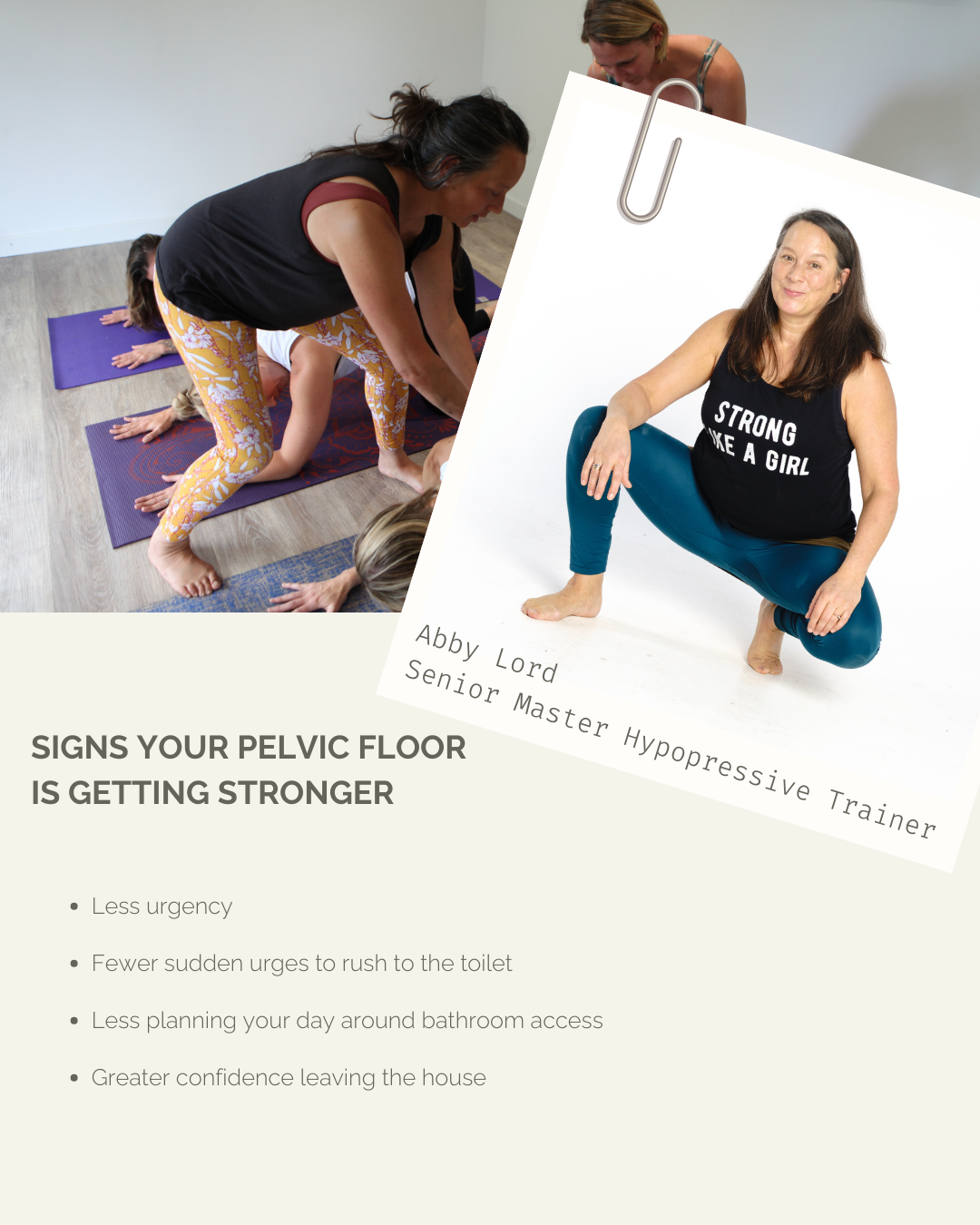
Signs your pelvic floor is getting stronger
Pelvic floor recovery, as I have said in previous blogs that have touched on this topic, rarely arrives with fireworks.
There is no dramatic moment where everything suddenly feels fixed. No obvious muscle flex you can see in the mirror. No loud signal telling you that the work you have been doing is paying off.
The pelvic floor sits deep inside the body. It supports the bladder, uterus and bowel, works closely with the diaphragm and abdominal wall, and responds constantly to breathing, movement and pressure.
Because of this, progress is often subtle.
Many women only measure improvement by the absence of symptoms, no leaks, no heaviness, no discomfort. But pelvic floor recovery usually begins much earlier than that.
It shows up quietly in how your body moves, breathes and responds to everyday life.
Learning to recognise these early signs of a strong pelvic floor can help you stay motivated and trust that your body is adapting.
The Disappearance of the “Just in Case” Habit
One of the earliest signs of pelvic floor recovery is a change in your relationship with your bladder.
Many women with pelvic floor dysfunction develop what is sometimes called the “just in case” habit. Before leaving the house, before getting in the car, before going to bed, they visit the toilet even when they do not really need to.
This pattern often develops when the bladder–brain communication system becomes overly sensitive.
As coordination improves, you may notice:
Less urgency
Fewer sudden urges to rush to the toilet
Less planning your day around bathroom access
Greater confidence leaving the house
Your bladder begins sending clearer signals again, and the pelvic floor responds more calmly.
This is not just muscle strength, it is improved neurological communication between the brain, bladder and pelvic floor.
Improved Posture and Mid-Section Support
Another subtle sign of progress is how your body holds itself during everyday activities.
Many women living with pelvic floor dysfunction unknowingly brace their abdomen or tuck their pelvis under for stability. This can create tension through the mid-section while still leaving the pelvic floor poorly supported.
As coordination improves, posture often changes naturally.
You may notice:
Standing taller without forcing it
Less abdominal gripping or bracing
A sense of gentle support through the centre of the body
Easier breathing into the ribs and back
Sometimes women also notice a subtle flattening of the abdomen. This does not come from sucking the stomach in, but from improved coordination between the diaphragm, abdominal wall and pelvic floor.
Practices such as hypopressive exercises often support this process because they train the body to organise pressure more efficiently rather than relying on constant muscular tension.
Better Management of Everyday Pressure
Everyday life constantly creates pressure inside the abdomen.
Sneezing, laughing, lifting shopping bags, picking up children or simply standing up from a chair.
When the pelvic floor is not coordinating well, these moments can feel risky. Many women describe a moment of panic before they cough or sneeze, worrying about leaks or a sense of downward pressure.
As pelvic floor recovery progresses, those moments often feel different.
You may notice:
Sneezing without worrying about leaking
Laughing freely again
Lifting everyday objects with confidence
Less sensation of pressure or bulging
Instead of consciously squeezing the pelvic floor every time you move, the body begins to organise pressure automatically.
That automatic response is one of the clearest signs of a strong pelvic floor.
Reduced Heaviness and Improved Pelvic Comfort
For women experiencing prolapse symptoms or pelvic fatigue, one of the most meaningful improvements is simply feeling more comfortable in the pelvis.
Early signs of improvement might include:
Less heaviness by the end of the day
Reduced dragging sensations during walking or standing
Less pelvic ache after long periods on your feet
Improved comfort during intimacy
These changes may occur even if a prolapse has not structurally changed. The pelvic floor, fascia and surrounding muscles are learning to share load more effectively.
Many women searching for female prolapse treatment or prolapsed uterus treatment at home are super relieved, like I was, to discover that functional improvement can happen even without surgery.
Approaches that focus on breathing, posture and pressure management, including Hypopressives, can help support pelvic comfort alongside guidance from a pelvic floor physiotherapist or pelvic floor specialist.
The Hypopressive Reflex: When Strength Becomes Automatic
One of the reasons many people experience progress with Hypopressives is that the technique focuses on reflexive function rather than isolated muscle contractions.
Traditional pelvic floor exercises often ask you to consciously squeeze and hold the muscles. Hypopressive exercises work differently. They use breath, posture and pressure changes to stimulate an automatic reflex response in the deep core system.
Over time this can lead to:
Improved ribcage mobility
Better breathing capacity
More efficient pressure regulation
Reflexive activation of the pelvic floor
Instead of constantly reminding yourself to contract the pelvic floor, the body begins responding automatically during movement. This reflexive coordination is often a key milestone in pelvic floor recovery.
From Rehabilitation to Resilience
Recovery is rarely a straight line.
Some days will feel easier than others, and symptoms may fluctuate as the body adapts.
What really matters most is consistency.
Research and clinical experience consistently show that regular, low-pressure practice tends to outperform short bursts of intense exercise when it comes to pelvic health.
Many women begin their journey with a pelvic floor physiotherapist, particularly after pregnancy or surgery. From there, ongoing practices such as Hypopressives can help maintain and build resilience.
This transition is particularly important for:
Postnatal recovery
Returning to exercise after childbirth
Supporting long-term pelvic health
Preventing cycles of improvement followed by relapse
A structured postnatal workout plan or supportive movement practice can help women move from rehabilitation into confident, everyday movement again.
Progress Is Often Quiet - But It Is Real
Pelvic floor recovery is not just about eliminating symptoms. It is about rebuilding trust between your brain, breath and body.
You may not notice a dramatic moment when everything changes. Instead, you may notice small shifts:
You stop worrying before you sneeze.
You walk a little further without discomfort.
You breathe more easily.
You feel more supported from the inside.
These quiet changes are often the first signs of a strong pelvic floor.
If you are noticing them, your body is adapting well.
If progress feels unclear or inconsistent, sometimes small refinements in breath, posture or technique can make a significant difference.
Working with a pelvic floor specialist can help identify what your body needs next.
Ready to Build on Your Progress?
If you would like support refining your technique or moving forward with your recovery, you can:
• Book a Pelvic Floor MOT for personalised guidance and assessment
• Begin with the £29.95 Beginner Hypopressives Course to learn the foundations of pressure-safe breathing and movement
• Join one of theHypopressive Scotland classes or workshops to continue building strength and resilience
Pelvic health is not about pushing harder. I wish I could tell every single woman who is still doing that! No, it is actually about learning how your body works, and then giving it the right conditions to recover and thrive.
Frequently Asked Questions
How long does pelvic floor recovery take?
Many women notice early improvements within six to twelve weeks of consistent practice, although full recovery timelines vary depending on symptoms and individual history.
Can Hypopressives support prolapse recovery?
Hypopressives are often used as a low-pressure, non-surgical support strategy alongside guidance from a pelvic floor physiotherapist.
Should I still see a pelvic floor physiotherapist?
Yes. Hypopressives can complement pelvic floor physiotherapy and may be used alongside professional guidance when appropriate.
Is a flatter stomach a sign my pelvic floor is stronger?
Sometimes. Improved coordination between the diaphragm, abdominal wall and pelvic floor can create a natural sense of mid-section support.
Do I need to keep practising once symptoms improve?
Yes. Pelvic health is maintained through consistent movement and breathing habits, not short-term fixes.