Bronchiolitis, Coughing and the Pelvic Floor: How Breathing Affects Pelvic Health
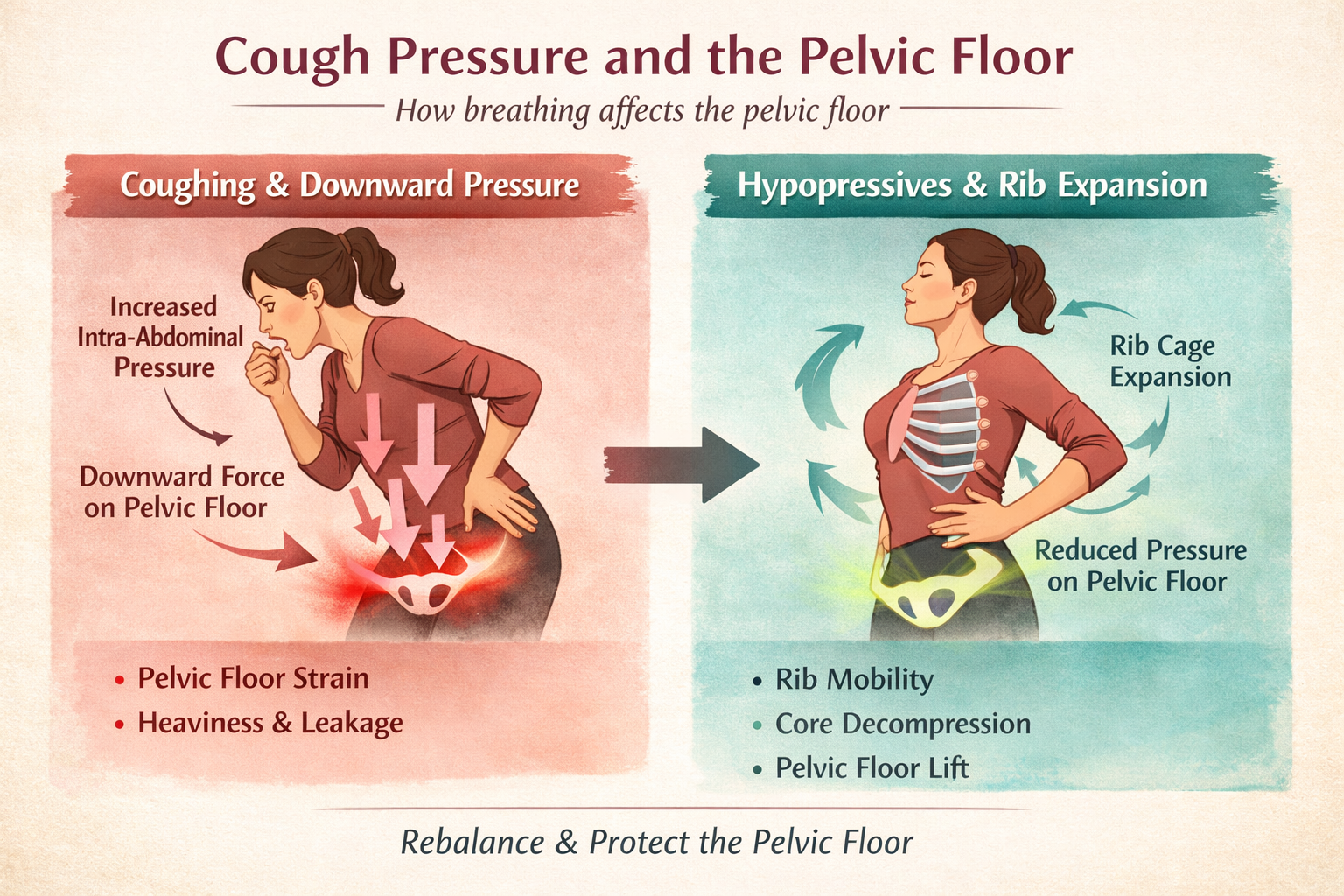
Repeated coughing during respiratory illness can increase downward pressure through the abdomen and pelvic floor. Breath-based approaches such as Hypopressives encourage rib expansion and help redistribute pressure more evenly through the body
When we think about illnesses like bronchiolitis, our attention usually settles firmly on the lungs. and this is only natural.
The coughing.
The wheezing.
The sense that breathing has suddenly become heavy and effortful.
Yet the lungs never work alone. Breathing is part of a wider, beautifully coordinated system that moves through the rib cage, the diaphragm, the abdomen and the pelvic floor. Each breath gently shifts pressure through the body, creating a rhythm that supports stability, movement and organ health.
When that rhythm becomes disrupted, the effects can travel further than we might expect.
Women sometimes notice that after a prolonged respiratory illness, something else in the body feels different too. There may be a subtle heaviness in the pelvis, a little more leaking with coughing or laughing, or a sense that the body is quietly holding tension that was not there before.
These experiences are rarely discussed, yet they make complete sense when we look more closely at how the body manages pressure.
Understanding Bronchiolitis
Bronchiolitis is an inflammatory condition affecting the very small airways of the lungs, known as the bronchioles. These tiny passages can become swollen and filled with mucus during viral infections, making breathing feel noticeably tighter and more restricted.
Most commonly, bronchiolitis is associated with respiratory viruses such as RSV or influenza. While it is often talked about in relation to infants and children, adults can also experience inflammation in the small airways after significant respiratory infections.
When breathing becomes strained or laboured, the body instinctively adapts. We might breathe a little higher into the chest, brace slightly through the abdomen, or hold the breath for brief moments without even noticing.
These small protective changes are entirely understandable. The body is simply trying to cope.
But over time, they can subtly shift how pressure moves through the system.
The quiet relationship between breathing and the pelvic floor
The pelvic floor does not act in isolation. It works in close conversation with the diaphragm above it, the abdominal wall that surrounds it, and the spine that supports it from behind.
Together these structures regulate what is known as intra-abdominal pressure. Each inhale and exhale gently redistributes pressure through this internal cylinder, allowing the body to move efficiently while protecting delicate structures below.
When breathing becomes shallow, guarded, or repeatedly interrupted by coughing, that pressure system can begin to behave differently.
Instead of dispersing evenly through the rib cage and abdomen, pressure may travel more directly downward.
The pelvic floor then becomes the structure that quietly absorbs much of that load.
When coughing becomes constant
Coughing is, by nature, a powerful reflex.
It is the body’s way of forcefully clearing the airways, but mechanically it creates a sudden surge of pressure through the abdomen and pelvis. When coughing happens occasionally, the body manages it well.
When coughing becomes frequent or persistent, as it often does during bronchiolitis or other chest infections, the pelvic floor can find itself repeatedly responding to these pressure spikes.
Over days or weeks, this repeated downward force may begin to show itself through symptoms such as pelvic heaviness, subtle leaking, or an increased sense of tension deep within the pelvis.
It is not that the pelvic floor has suddenly become weak. Often it has simply been working extremely hard to protect the body during illness.
How breathing patterns quietly change
During respiratory infections, breathing can become surprisingly guarded.
People often begin to lift the chest rather than expand the ribs. The abdomen may brace slightly as the body tries to stabilise the trunk during coughing fits. Breath holds may slip in without conscious awareness.
These patterns develop quite naturally as protective strategies.
Yet when they continue after the illness has passed, they can leave the body feeling a little stuck. The diaphragm may move less freely. The ribs may feel somewhat rigid. Pressure may no longer flow as smoothly through the torso.
When that happens, the pelvic floor often responds by tightening or overworking, quietly trying to maintain stability.
The rib cage often needs time to soften again
One of the less obvious effects of prolonged coughing is how noticeably stiff the rib cage can become.
The muscles between the ribs may remain slightly contracted after weeks of guarding. The diaphragm may lose some of its natural excursion. Even the spine can become a little protective.
When the ribs stop expanding easily, pressure tends to travel downward rather than outward.
Gently restoring rib mobility and breathing rhythm can therefore make a surprisingly meaningful difference to how the entire pressure system behaves.
Why breath-based movement can help
Once the infection has fully settled and the body is ready for gentle movement again, it can be deeply supportive to begin with approaches that encourage soft, spacious breathing rather than forceful core effort.
This is one of the reasons Hypopressives can be so helpful during recovery.
Rather than pushing pressure downward through strong abdominal contraction, Hypopressives invite the ribs to widen gradually and the abdominal cavity to decompress. The breath becomes slower, the rib cage more mobile, and the pelvic floor often responds by easing its grip.
Over time, the body can begin to reorganise itself.
The diaphragm regains its natural movement. Pressure disperses more evenly through the torso. The pelvic floor no longer has to carry quite so much of the load.
In many cases, symptoms that appeared after respiratory illness begin to settle as the body rediscover its internal rhythm.
Returning gently to movement
After bronchiolitis or any prolonged chest infection, the body benefits from patience.
Simple walking, relaxed breathing, gentle rib movement and posture awareness can gradually reintroduce flow through the system. High-pressure exercises, heavy lifting or intense abdominal work are usually best reintroduced slowly.
Allowing the body to reconnect with breath first often makes the return to activity feel far smoother.
A reminder of how connected the body truly is
The body rarely works in isolated parts. The lungs, ribs, diaphragm, abdominal wall and pelvic floor are quietly collaborating with every breath we take.
When one part of that system is under strain, the others often respond.
By gently restoring breathing patterns and rib mobility after illness, we are not only supporting the lungs. We are helping the entire pressure system return to balance.
Sometimes the most powerful step back toward strength is not pushing harder, but allowing the body the space to breathe again.
Support for your pelvic floor
If you have noticed pelvic symptoms following a respiratory illness, it can be reassuring to explore how breathing and pressure patterns may be influencing your body.
A Pelvic Floor MOT offers a personalised assessment of breath, posture and pressure management.
My Beginner Hypopressives Course (£29.95)also teaches gentle techniques to help restore rib mobility and support pelvic floor function safely at home.